
Last updated:
AI detection tools are everywhere in 2026. Universities are tightening academic integrity policies, professors are running submissions through multiple scanners, and students are constantly worried about being falsely flagged. Naturally, tools like ZeroGPT have become incredibly popular.
But here’s the real question: Is ZeroGPT actually accurate, or is it just another AI detector riding the wave of ChatGPT anxiety?
To answer that, I tested ZeroGPT with three short samples: a human-written academic paragraph, a fully AI-generated passage and an AI passage I edited by hand. I then compared my results with ZeroGPT’s own accuracy claims and with independent research. The results were not what I expected.
If you’re a student, educator, or academic professional wondering whether you should trust ZeroGPT, this detailed review will help you decide.
Not reliably. It caught AI text, but it also scored my human-written paragraph as 100% AI. Use it as a rough first check, never as proof.
- Test 1Human-written100% AI
- Test 2AI-generated100% AI
- Test 3Edited AI100% AI
Three short samples, so this is a practical check, not a benchmark. A 2024 peer-reviewed study found the opposite weakness: no false positives, but it missed 24 of 40 AI essays.
What Is ZeroGPT?
ZeroGPT is an AI content detection tool designed to identify whether a piece of text was generated by AI models like ChatGPT, GPT-4, Claude, or similar systems.
It claims to:
- Detect AI-written content
- Provide a percentage-based AI probability score
- Highlight sentences that appear AI-generated
- Support multiple languages
ZeroGPT is widely used by students, teachers, content editors, and online publishers. Because it offers a free version, many people test it before using more advanced academic systems.
| Feature | Details |
|---|---|
| Free check limit | Up to 15,000 characters per scan; the checker offers 350,000 characters on paid plans |
| Claimed accuracy | 98.4% detection accuracy and a false positive rate under 1%, according to ZeroGPT |
| Technology | “DeepAnalyse” model, which ZeroGPT says covers 35+ LLM families |
| Languages | ZeroGPT says its model is trained on all languages |
| Results shown | A percentage gauge, a one-line verdict and highlighted sentences, with PDF export |
| Other tools | Plagiarism checker, AI humanizer, paraphraser, summarizer, grammar checker and more |
Checked October 2026 on ZeroGPT’s homepage. ZeroGPT does not publish how its accuracy figures were measured.
Like most AI content detection tools, ZeroGPT analyzes patterns such as:
- Sentence predictability
- Language structure consistency
- Perplexity scores
- Burstiness variations
In simple terms, it looks for writing patterns that are statistically more common in machine-generated text.
But does it work reliably?
Why AI Detection Matters in 2026
AI-generated essays are no longer easy to spot manually. Even basic prompts can produce well-structured, citation-style academic writing. That has made AI detection accuracy a serious issue for universities.
However, AI detection tools are not perfect. False positives are becoming a growing concern, especially for:
- Non-native English writers
- Students with formal academic tone
- Technical or structured writing styles
A 2023 Stanford study found that several GPT detectors misclassified essays by non-native English writers as AI-generated far more often than essays by native speakers.
Before using any tool, students should understand what is considered an acceptable AI detection percentage in universities and how institutions interpret these reports.
This context is critical before trusting any percentage score blindly.
How I Tested ZeroGPT (Full Transparency)
To make this ZeroGPT review realistic, I tested three different content types.
Test Case 1: Fully Human-Written Academic Style Text
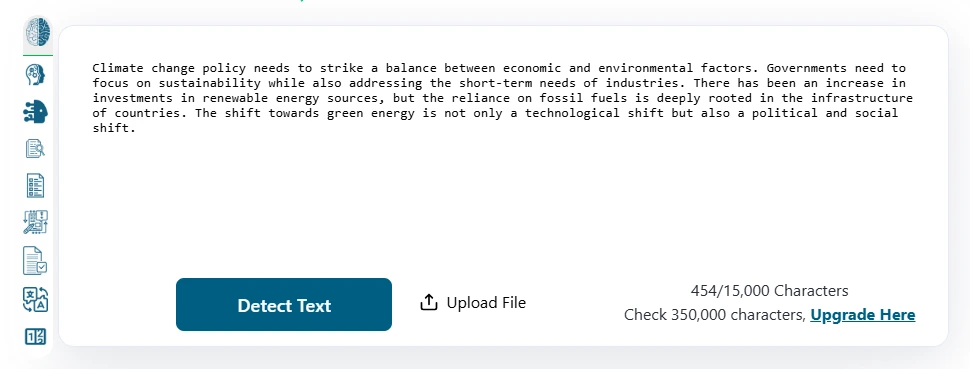
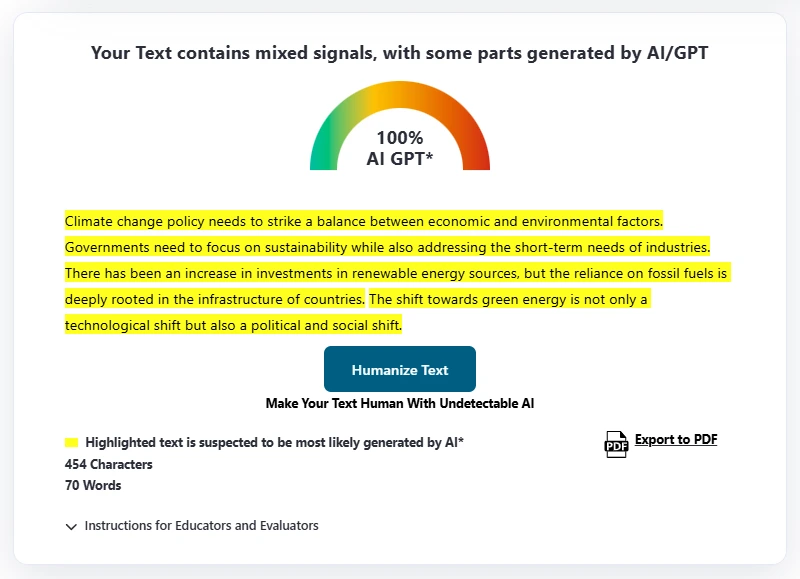
This was the most concerning result of the entire experiment.
The text was written manually without any AI assistance. It followed a formal academic tone, used structured arguments, and presented balanced analysis. Despite this, ZeroGPT returned a 100% AI probability score.
This indicates a severe false positive. In academic settings, a 100% AI score can trigger serious consequences, including integrity reviews or formal investigations. If fully human-written academic work is classified as entirely AI-generated, it raises serious questions about the reliability of the detection system.
One possible explanation is that ZeroGPT strongly associates structured academic writing with AI-generated patterns. Many high-performing students write in a consistent, logical, and formal style, which may resemble large language model outputs. If tone and clarity alone trigger a 100% AI score, the risk of misclassification becomes significant.
This result suggests the tool may be overly sensitive to academic structure rather than accurately identifying authorship.
Test Case 2: 100% AI-Generated Text
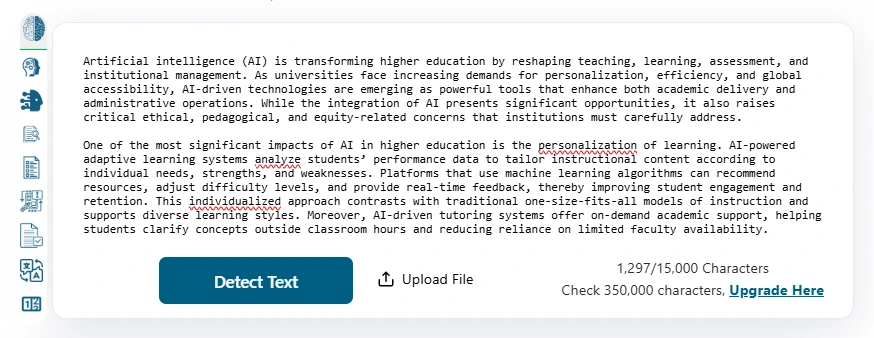
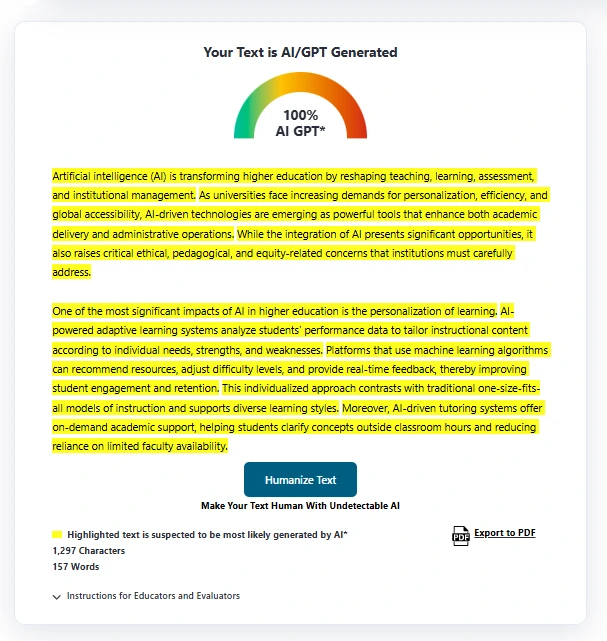
In this case, the result was expected. The content was generated entirely using an advanced AI model with no human editing. The 100% AI detection score aligns with the test conditions.
This shows that ZeroGPT can successfully identify clearly machine-generated content when it is used in its original form. The predictable sentence structure, uniform tone, and consistent flow likely made detection straightforward.
However, accuracy in identifying obvious AI-generated content is only one part of the equation. A reliable AI detector must also distinguish between human and AI writing with precision. When viewed alongside the previous test, where fully human-written content also received a 100% AI score, this result becomes less reassuring.
Detection systems must balance sensitivity with specificity. Without that balance, high detection rates may not equal high reliability.
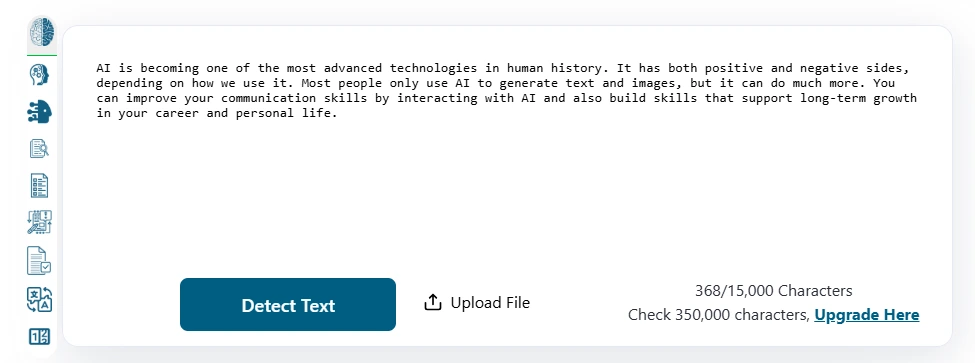
Test Case 3: Lightly Edited AI Text
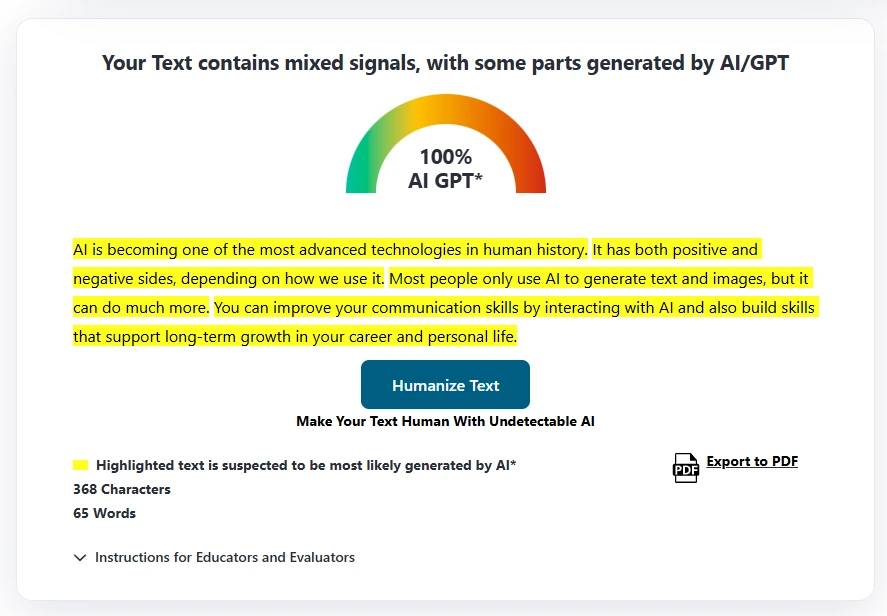
This outcome was unexpected.
The AI-generated content was manually edited to improve sentence variation, adjust phrasing, and slightly restructure key arguments. Despite these human modifications, ZeroGPT still returned a 100% AI score.
There are two possible interpretations. First, the edits may not have significantly altered the deeper linguistic patterns that the system analyzes. Second, the detection model may apply aggressive classification thresholds once certain AI indicators are triggered.
If small but meaningful human edits do not reduce the AI score at all, this suggests the model may rely on broader statistical markers rather than surface-level writing features. However, when considered alongside the fully human-written text also receiving a 100% AI score, a different concern emerges.
The tool appears highly sensitive but potentially lacks precision. When different types of content consistently produce identical extreme results, it becomes difficult to evaluate whether the detection system is distinguishing authorship accurately.
Overall Interpretation of These Three Results
Across all three tests, the outcome was identical:
| Test | Known source | ZeroGPT result | Verdict |
|---|---|---|---|
| Test 1 | Fully human-written, formal academic (70 words) | 100% AI, labelled “mixed signals” | False positive |
| Test 2 | Fully AI-generated (157 words) | 100% AI, labelled “AI/GPT generated” | Correct |
| Test 3 | AI text, lightly edited by hand (65 words) | 100% AI, labelled “mixed signals” | Detected, but no nuance |
All three samples are short (65 to 157 words), which gives any detector less to work with. Note that ZeroGPT’s written label said “mixed signals” for Tests 1 and 3 while its gauge showed 100%.
This lack of variation suggests limited differentiation between content types.
An effective AI detection tool should produce different probability ranges based on authorship patterns. When all content categories return the same maximum score, it raises concerns about over-detection and false positive risk.
In academic environments, this distinction is critical. AI detection should support integrity, not create uncertainty for students submitting genuine work.
These findings suggest that ZeroGPT’s scoring system may require cautious interpretation rather than blind trust in percentage outputs.
ZeroGPT’s Label and Score Did Not Match
There was a second problem in my screenshots. For Tests 1 and 3, ZeroGPT’s written verdict said “Your text contains mixed signals, with some parts generated by AI/GPT”, yet the gauge directly below showed 100 percent AI. A mixed result and a 100 percent score cannot both be right.
If you receive a result like this, screenshot both the label and the gauge. The contradiction is useful evidence when you discuss the score with an instructor.
ZeroGPT Accuracy: Claims vs Independent Research
ZeroGPT’s homepage claims 98.4 percent detection accuracy and a false positive rate below 1 percent, based on its DeepAnalyse model. It does not publish the dataset or method behind those figures, so they cannot be checked independently.
The best independent evidence comes from a 2024 peer-reviewed study in the International Journal for Educational Integrity. Researchers tested three AI detectors on 68 humanities essays, 40 written by ChatGPT and 28 by people. ZeroGPT did not flag a single human essay, but it identified only 16 of the 40 AI essays, giving it 64.71 percent accuracy. In the same study, GPTZero reached 86.76 percent and QuillBot 95.59 percent (see our QuillBot AI detector test).
That is the opposite of my result, where ZeroGPT flagged human writing. Together, the two findings show that ZeroGPT can be wrong in both directions. My samples were short (65 to 157 words) and formal, which gives any detector less to work with, while the study used full-length essays.
| Source | What it found | Who measured it |
|---|---|---|
| ZeroGPT homepage | 98.4% detection accuracy, under 1% false positives | ZeroGPT (no method published) |
| Revell et al., 2024 (68 humanities essays) | 64.71% overall accuracy. Flagged 0 of 28 human essays, but caught only 16 of 40 AI essays. | University researchers, peer-reviewed |
| Same study, other tools | QuillBot 95.59%, GPTZero 86.76%, human markers 79.41% | University researchers, peer-reviewed |
| My 3-sample test | Flagged my human-written academic paragraph as 100% AI | Skyline Academic |
Sources: ZeroGPT and International Journal for Educational Integrity (2024). Small tests like mine and large studies can disagree, which is why no single score should be treated as proof.
ZeroGPT Pros and Cons
ZeroGPT is quick and free, and it handled clear AI text well. Its weaknesses are the ones that matter most in academic settings: extreme scores, a label that can contradict the score, and accuracy claims without a published method.
- Free to use for quick checks
- Up to 15,000 characters per scan
- Fast results with highlighted sentences
- Caught my fully AI-generated sample at 100%
- PDF export of each result
- Scored my human-written paragraph as 100% AI
- Label and score can disagree (“mixed signals” at 100%)
- Accuracy claims have no published method
- Peer-reviewed study: caught only 16 of 40 AI essays
- Promotes its own AI humanizer next to results
Does ZeroGPT Detect Plagiarism?
This is a common misconception.
ZeroGPT’s AI detector does not check for plagiarism. The company offers a separate plagiarism checker as another tool on its site, but an AI score and a plagiarism check answer different questions.
AI detection identifies whether content appears machine-generated. Plagiarism detection checks whether text matches existing published sources.
They are not the same.
Understanding the different types of plagiarism is important if you are submitting academic work. Many students confuse AI-generated content with plagiarism, but they are distinct academic concerns.
If plagiarism detection is your priority, a dedicated free plagiarism checker may be more appropriate.
ZeroGPT vs Other AI Detectors
To understand if ZeroGPT is reliable, we need to compare it with competitors.
The names are almost identical, but they are separate tools from different companies. ZeroGPT runs at zerogpt.com; GPTZero runs at gptzero.me. If you were checking GPTZero, read our test of whether GPTZero is accurate instead.
ZeroGPT vs GPTZero
In the 2024 study above, GPTZero was more accurate than ZeroGPT (86.76 percent against 64.71 percent), but it also produced two false positives on human essays, where ZeroGPT produced none. Both tools can struggle with edited AI text. If you want to see how they actually perform side by side, read a detailed comparison of GPTZero and ZeroGPT, including real test results, pricing, and reviews.
ZeroGPT vs Turnitin
Turnitin operates differently. It integrates AI detection within a broader plagiarism detection ecosystem. However, it is typically available only through institutions.
Students often look for a Turnitin alternative for students when institutional access is unavailable.
ZeroGPT vs Skyline Academic
When comparing ZeroGPT to Skyline Academic, the difference lies in depth and academic focus.
Skyline Academic provides:
- Detailed AI and plagiarism reporting
- Designed specifically for students and academics
- Affordable personalized plans
- Live tutoring support if students need guidance
It also combines AI detection with advanced plagiarism scanning through its AI content detector, offering more transparency than simple percentage-based tools.
For a full comparison, you can explore Turnitin vs GPTZero vs Skyline Academic to see how detection systems differ in academic reliability.
Can Edited or Paraphrased Text Fool ZeroGPT?
Sometimes. Paraphrasing tools and heavy rewriting can change any detector’s score, which is one reason a low score never proves human writing. In my test, light hand-editing did not change ZeroGPT’s result at all: the edited AI text still scored 100 percent.
ZeroGPT also places a “Humanize Text” button directly under its results, promoting its own AI humanizer. A detector that also sells a way around detection is worth keeping in mind when you weigh its scores.
Trying to disguise AI-generated work breaches most academic integrity policies. If your own writing is being flagged, the better route is to keep your drafts and version history and to ask how the score will be used.
Is ZeroGPT Reliable for Universities in 2026?
The short answer: not on its own.
ZeroGPT can be a helpful preliminary tool. However, it should not be the sole basis for academic decisions.
A fair review should:
- Use more than one source of evidence
- Review writing history
- Consider contextual evidence
- Evaluate draft submissions
Relying on a single percentage score is risky.
If you are submitting academic work, keep your drafts and version history, and check both AI and plagiarism results before you submit, since they answer different questions.
My Final Verdict: Is ZeroGPT Accurate?
On my three samples, ZeroGPT caught AI text every time but also called a fully human-written academic paragraph 100 percent AI, and its own label contradicted its score. A larger peer-reviewed study found the reverse problem: no false positives, but most AI essays missed.
ZeroGPT is free, fast and easy to use, so it is fine for a quick look at your own draft. It is not accurate enough to judge someone else’s work. If a ZeroGPT score is ever used against you, ask for the highlighted text, show your drafts and version history, and remember that the company’s 98.4 percent claim has never been independently confirmed.
ZeroGPT FAQs
Is ZeroGPT accurate?
Not reliably. In my test it correctly flagged AI-generated text but also scored a fully human-written academic paragraph as 100% AI. A 2024 peer-reviewed study found the opposite weakness, with no false positives but only 16 of 40 AI essays caught, for 64.71% accuracy overall.
Is ZeroGPT reliable for AI detection?
It is useful for a rough first check but not reliable enough to prove authorship. Its results can swing to extremes on short or formal writing, so read the highlighted sentences and use drafts or version history as the real evidence.
Does ZeroGPT give false positives?
Yes, it can. My 70-word human-written academic paragraph received a 100% AI score. ZeroGPT claims a false positive rate under 1%, but it does not publish how that figure was measured.
Is ZeroGPT legit?
Yes, ZeroGPT is a real, widely used AI detector that works as advertised: you paste text and get a score. Being legitimate is not the same as being accurate, and its accuracy claims have not been independently confirmed.
Is ZeroGPT safe to use?
It is a mainstream web tool, but its homepage does not explain how long submitted text is kept. Read its privacy policy before uploading, and avoid pasting confidential or unpublished work into any online detector.
Are ZeroGPT and GPTZero the same?
No. They are separate tools from different companies with almost identical names. In the same 2024 study, GPTZero scored 86.76% accuracy and ZeroGPT scored 64.71%.
Does ZeroGPT check for plagiarism?
Its AI detector does not compare your text with published sources. ZeroGPT offers a separate plagiarism checker as another tool on its site, so an AI score and a plagiarism check answer different questions.
How much text can ZeroGPT check for free?
The free checker accepts up to 15,000 characters per scan, which is roughly 2,000 to 2,500 words. Paid plans raise the limit to 350,000 characters.
What is a good ZeroGPT score?
There is no safe score. My human-written text scored 100% AI, so a high result does not prove AI use and a low result does not prove human writing. Universities set their own policies on how detector scores are used.
Should universities rely on ZeroGPT?
Not on its own. A fair review combines any detector result with the student’s drafts, version history, sources and ability to explain the work. A detector score should never be the only basis for a penalty.