Can I trust PapersOwl Plagiarism Checker before submitting my assignment?
That is the question many students ask when they are trying to check an essay, report, dissertation, coursework, or research paper before the deadline. A plagiarism checker can feel like a quick safety step, especially when you do not have access to Turnitin or your university does not allow draft checks before final submission.
PapersOwl is one of the tools students often find when searching for a free plagiarism checker online. It looks simple, student-friendly, and easy to access. The tool is promoted as a plagiarism checker for students, and it claims to help users check originality and receive a plagiarism percentage report.
But the real question is not only whether PapersOwl exists or whether it scans text. The more important question is whether PapersOwl Plagiarism Checker is accurate enough for academic work.
To answer that properly, I tested PapersOwl with different types of content. I checked copied content from a live website, paraphrased website content, ChatGPT-generated content, and paraphrased ChatGPT content. These are realistic situations because students often deal with copied notes, rewritten sources, AI-generated drafts, and paraphrased material.
The short answer is this: PapersOwl Plagiarism Checker may be useful for a quick first scan, but students should not fully depend on it before submitting academic work. A plagiarism checker is only helpful when it is combined with proper citation review, paraphrasing checks, reference checking, and academic guidance.
That is why this review will look at PapersOwl in a balanced way. I will explain what it does, why students use it, what I found in my test, where it may be helpful, where it may fall short, and what better alternatives students can consider.
Quick Answer: Is PapersOwl Plagiarism Checker Legit?
Yes, PapersOwl Plagiarism Checker appears to be a real plagiarism checking tool, and it is commonly promoted as a free plagiarism checker for students. However, being legit does not automatically mean it is fully accurate, reliable, or suitable as your only academic originality check.
This difference matters a lot.
A tool can be real and still miss plagiarism. It can scan your text and still fail to detect some copied or paraphrased content. It can give you a percentage and still not explain whether your citations, references, or paraphrasing are academically safe.
So, if you are asking “is PapersOwl Plagiarism Checker legit?” the answer is yes, it is a real tool. But if you are asking whether you can fully trust it before submitting university work, the answer is more careful: use it as a first check, not as your final proof that your assignment is plagiarism-free.
Students should remember that plagiarism detection is not only about software. It is also about understanding sources, citations, paraphrasing, quotation rules, academic integrity, and university expectations.
That is where a complete support system such as Skyline Academic can be more useful for students who need checking plus guidance.
What Is PapersOwl Plagiarism Checker?
PapersOwl Plagiarism Checker is an online tool designed to help users check text for possible plagiarism. Students usually find it when searching for free plagiarism checkers, essay originality tools, or ways to check assignments before submission.
The tool is promoted as a quick way to check whether your writing contains copied or matching content. In simple terms, you paste or upload your writing, run the check, and review the result. The result may include a plagiarism percentage or originality indication, depending on the tool output.
For students, this sounds helpful because plagiarism can be stressful. Nobody wants to submit an assignment and later find out that a paragraph was too close to a source, a citation was missing, or copied wording was accidentally left in the draft.
However, a plagiarism checker result should never be treated as a complete academic judgment. A checker may identify matching text, but it may not understand whether your citation is correct. It may not know whether your professor allows certain sources. It may not know whether AI-generated content is allowed in your course.
So, PapersOwl can be useful as a first step, but students still need to review the result manually.
Why Students Use PapersOwl Plagiarism Checker
Students use PapersOwl Plagiarism Checker because they want a quick way to check their work before submission. Most students are not trying to cheat. Many are simply worried about accidental plagiarism.
For example, a student may write an essay after reading several online articles and then wonder whether the wording sounds too close to the source. Another student may paraphrase a paragraph but feel unsure whether it is changed enough. Someone else may use ChatGPT for brainstorming and then worry whether the final draft is still acceptable.
These are real concerns.
Plagiarism can happen in different ways. It is not limited to copying and pasting an entire paragraph. It can also happen through poor paraphrasing, missing citations, patchwriting, incorrect quotations, self-plagiarism, or using ideas without credit. If you are unsure about this, it helps to understand the different types of plagiarism before depending on any checker.
Students also use PapersOwl because they may not have direct access to Turnitin. Many universities do not let students run unlimited draft checks. Some only show the report after final submission. That makes free online tools attractive because they feel easy and immediate.
However, quick access does not always mean complete accuracy. A free checker can be useful, but it should not replace proper academic review.
How I Tested PapersOwl Plagiarism Checker
To make this PapersOwl Plagiarism Checker review more useful, I tested it using four different content types. I wanted to see how it would respond to situations that students actually face.
The four test types were:
- Fully copied website content
- Paraphrased copied website content
- ChatGPT-generated content
- Paraphrased ChatGPT-generated content
The point of this test was not to prove that every PapersOwl result will always be the same. Plagiarism checker results can vary depending on the source, database access, text length, indexing, wording, and how the checker compares content.
Still, these tests are useful because they show whether the tool gives students reliable signals in common academic situations.
| Test | Content Type | Expected Result | PapersOwl Result | Was It Accurate? |
| Test 1 | Fully copied content from a live website | It should detect copied content | Add result from screenshot | Add yes or no based on screenshot |
| Test 2 | Paraphrased copied website content | It should detect possible similarity or source risk | Add result from screenshot | Add yes or no based on screenshot |
| Test 3 | ChatGPT-generated content | It may show originality, similarity, or no match | Add result from screenshot | Add yes or no based on screenshot |
| Test 4 | Paraphrased ChatGPT-generated content | It may miss it or show low similarity | Add result from screenshot | Add yes or no based on screenshot |
Test Results: Is PapersOwl Plagiarism Checker Accurate?
The test results are the most important part of this review because they show how PapersOwl performed in practical situations.
Students should not judge a plagiarism checker only by its website claims. The real value of a checker is whether it can help you identify risk before you submit your work.
What I Found When I Tested Fully Copied Website Content
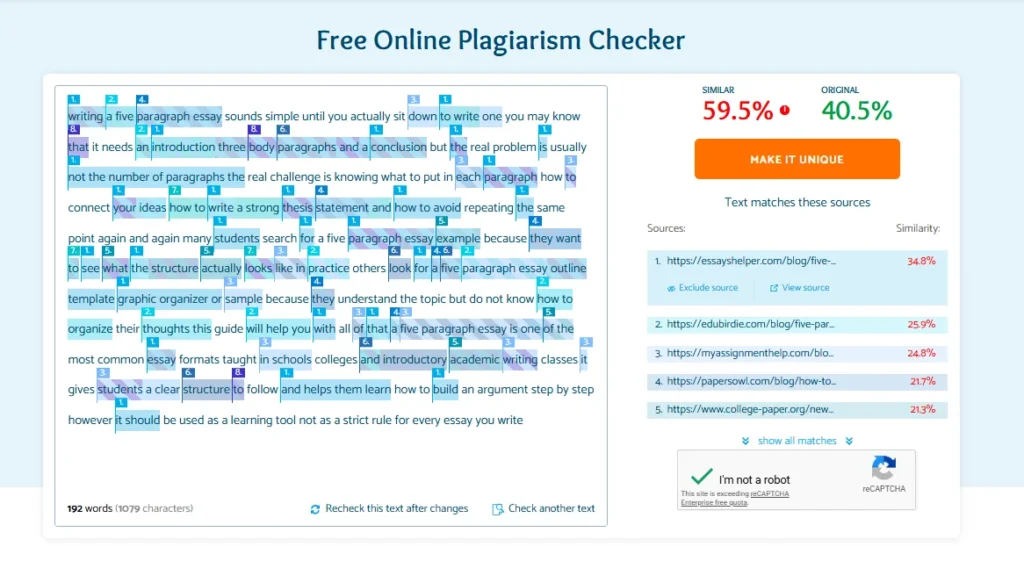
In this test, I copied content directly from a live website and checked it through PapersOwl Plagiarism Checker. This was the most straightforward test because fully copied online content should normally be easier for a plagiarism checker to detect than heavily rewritten content.
If PapersOwl detected the copied source, that would show it can catch at least some direct website matches. If it missed the copied text, that would be a serious concern because students may believe their work is safe when it actually contains copied material.
This test is important because many plagiarism problems begin with notes copied from online sources. A student may paste research into a draft and forget to rewrite or cite it properly. A checker that misses direct copying can create false confidence before submission.
What Happened When I Tested Paraphrased Website Content
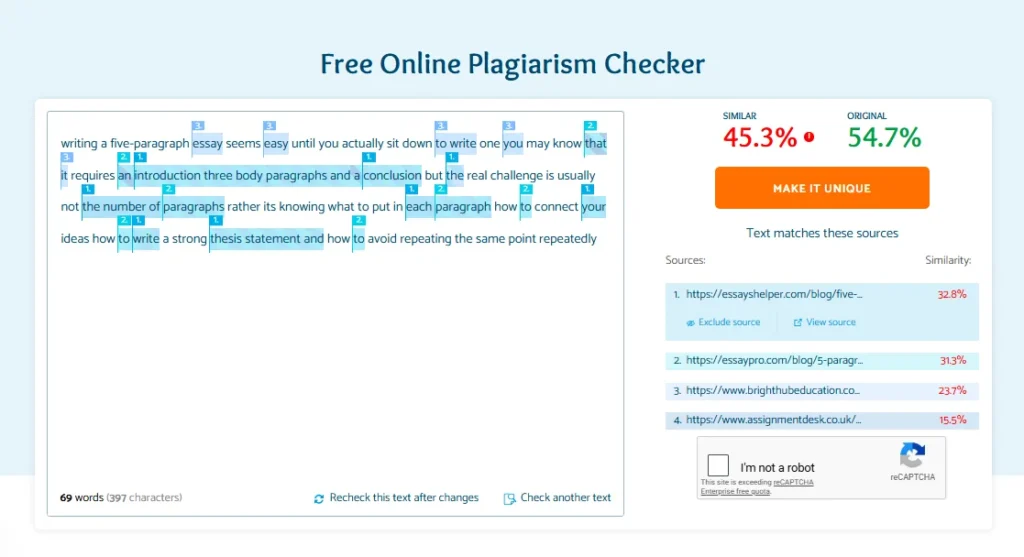
For the second test, I paraphrased the copied website content and checked it again. I wanted to see whether PapersOwl could identify possible similarity after the wording had been changed.
This matters because many students assume paraphrasing automatically removes plagiarism risk. That is not true. Paraphrasing only works when the idea is rewritten properly in your own words and the original source is credited where needed.
If PapersOwl missed this paraphrased version, it would not necessarily mean the content is academically safe. It may only mean that the tool could not match the rewritten text to the source. This is why students should not depend only on a similarity percentage. Manual review is still necessary.
What PapersOwl Showed for ChatGPT-Generated Content
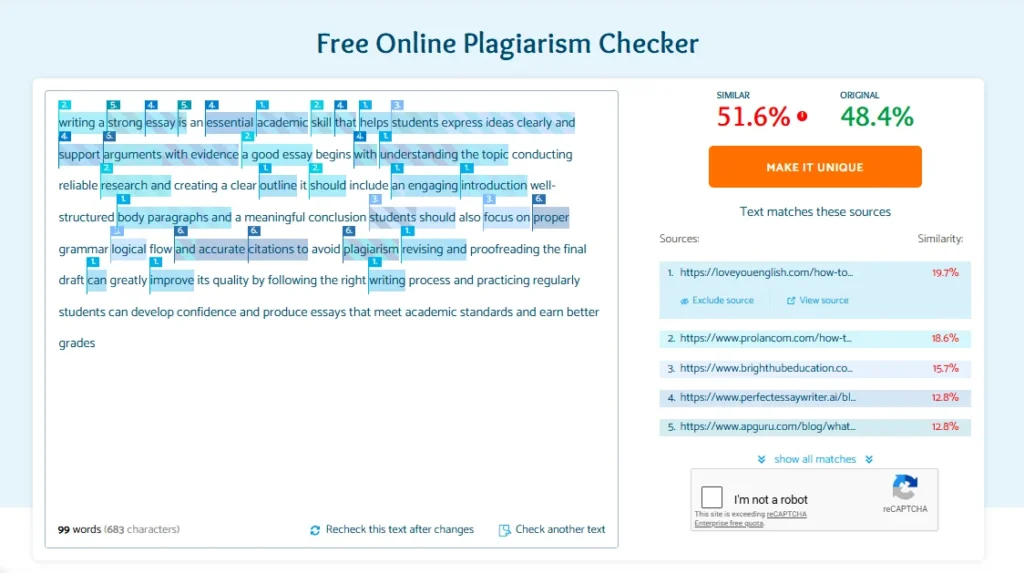
In this test, I generated a piece of content using ChatGPT and checked it through PapersOwl Plagiarism Checker. This test is slightly different because AI-generated content and plagiarism are not exactly the same thing.
A plagiarism checker usually looks for matching text from existing sources. An AI detector tries to estimate whether writing may have been generated by AI. These are related concerns, but they are not identical.
If PapersOwl flagged the ChatGPT-generated content, that may show some similarity with existing patterns or sources. If it did not flag it, that does not automatically mean the content is allowed for academic submission. Students still need to check their university policy on AI use.
This is why it is risky to rely on a plagiarism checker alone when AI writing is involved.
What Happened After I Paraphrased the ChatGPT Content
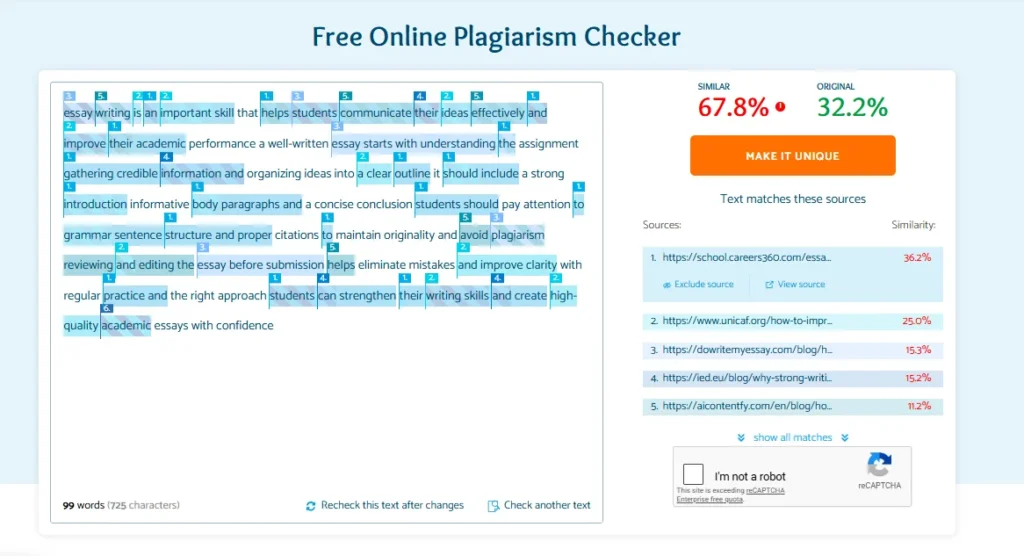
For the final test, I paraphrased the ChatGPT-generated content and checked it again. This test shows how the tool responds when AI-generated writing is rewritten.
If PapersOwl showed a lower similarity result or failed to detect any issue, students should be careful. A low plagiarism result does not automatically mean the work is academically acceptable. If AI use is not allowed, or if the student did not genuinely understand and write the content, there may still be an academic integrity issue.
This test also shows why students should separate three things: plagiarism checking, AI detection, and academic writing quality. A text can pass a plagiarism checker but still be weak, unsupported, poorly cited, or against course rules.
Is PapersOwl Plagiarism Checker Reliable for Students?
PapersOwl Plagiarism Checker may be reliable for a basic first scan, but it should not be treated as fully reliable for serious academic submissions.
This is not only a PapersOwl issue. Many free plagiarism checkers have similar limitations. They can be useful for obvious matches, but they may miss paraphrased content, sources outside their database, or more complex plagiarism patterns.
The biggest risk is false confidence.
A student may check an assignment, see a low plagiarism score, and assume everything is fine. But the university may use a different system with access to more academic sources, student papers, journals, or institutional databases. The result may be very different.
So, is PapersOwl Plagiarism Checker reliable? It depends on how you use it.
It is more reliable as a starting point than as a final decision. It may help you notice obvious copied wording. But it cannot replace proper citation checks, reference review, and academic judgment.
Students should also remember that plagiarism checkers do not always understand context. A tool may highlight a properly quoted sentence. It may miss an uncited paraphrase. It may show a number without explaining whether the issue is serious.
That is why the student still needs to review the report carefully.
Can Students Trust PapersOwl Plagiarism Checker Before Submission?
Students can use PapersOwl before submission, but they should not trust it blindly.
It is fine to use it as part of your checking process. For example, you can run your essay through PapersOwl, review the matched sections, check your citations, and fix any weak paraphrasing. That can be helpful.
But you should not submit your assignment only because one free checker says it is clean.
Universities may use different plagiarism systems. They may compare your work against journal articles, books, previous student submissions, paid databases, institutional records, and web sources. A public plagiarism checker may not have the same access.
Also, plagiarism is not only about matching words. It is about source honesty. If you use someone else’s idea, data, argument, structure, or explanation without credit, that can still be a problem even if the tool does not flag it.
So, can students trust PapersOwl Plagiarism Checker? Trust it as a helpful tool, but not as the final judge.
For students who need more support, 1:1 Personalized Live Tutoring can help because a tutor can explain how to improve the assignment, fix citation issues, and understand academic integrity properly.
PapersOwl Plagiarism Checker Pros and Cons
Like most plagiarism tools, PapersOwl has both useful features and limitations. It can be convenient for students who need a quick scan, but it should not replace a proper academic review.
| Pros | Cons |
| Easy to access online | May miss paraphrased plagiarism |
| Useful for quick checks | May not match university-level tools |
| Student-friendly interface | May give students false confidence |
| Helpful for spotting some copied text | May not fully explain citation problems |
| Free or easy to try | Results may vary by source and content type |
| Can be used before editing a draft | Should not replace manual academic review |
| Useful when students do not have Turnitin access | May not access the same databases as universities |
The main benefit is convenience. Students can quickly check a draft and see whether something obvious appears. That can be helpful during editing.
The main weakness is reliability. If a tool misses copied or paraphrased material, students may wrongly assume their work is safe.
That is why PapersOwl should be used as an early warning tool, not as your final academic safety check.
PapersOwl Plagiarism Checker vs Other Plagiarism Checkers
Students often compare PapersOwl with other plagiarism checkers, AI detectors, and academic support tools. This comparison matters because not every tool is built for the same purpose.
Some tools are made for grammar. Some are made for similarity checking. Some are made for AI detection. Some are academic support platforms that combine checking with human guidance.
| Tool or Option | Best For | Weakness | Student Recommendation |
| PapersOwl Plagiarism Checker | Quick online plagiarism scans | May not be enough for university-level checking | Use as a first check only |
| Turnitin | Institutional similarity reports | Usually controlled by universities | Useful if your university provides access |
| Grammarly plagiarism checker | Grammar support plus basic plagiarism checking | Not always reliable for academic originality | Good for writing improvement, not enough alone |
| Free plagiarism checkers | Fast and accessible checks | Accuracy varies between tools | Compare free vs paid plagiarism checkers before relying on one |
| AI detectors | Checking possible AI-generated content | Can give false positives or false negatives | Use an Authentic AI detector for students carefully |
| ZeroGPT | AI detection review and comparison | AI detection is not the same as plagiarism checking | Use only as one part of your review |
| Skyline Academic | Plagiarism support, tutoring, AI checking, coursework help, and academic guidance | Requires active student involvement | Best for students who need support beyond a tool |
The key takeaway is simple. PapersOwl may help with a first plagiarism check, but students should not compare it directly with university-level systems. A university system may have different source access, different settings, and a stricter academic review process.
Why PapersOwl May Miss Plagiarism
PapersOwl may miss plagiarism for several reasons. These reasons apply to many plagiarism checkers, especially free or public tools.
The first reason is database limitation. A plagiarism checker can only compare your writing with sources it can access. If a source is not indexed, blocked, private, newly published, or behind a paywall, the checker may not detect it.
The second reason is paraphrasing. If the wording has been changed enough, a tool may not match it to the original source. But that does not automatically make the content original. If the idea, argument, or structure is borrowed without citation, it can still be a problem.
The third reason is academic database access. University tools may compare papers against student submissions, journals, books, and institutional databases. A free online checker may not have the same access.
The fourth reason is AI-generated content. AI writing may not always match a single source. A plagiarism checker may show low similarity even if the writing is not acceptable according to course rules.
The fifth reason is that similarity scores can be misunderstood. A low score does not always mean the paper is safe. A high score does not always mean the student cheated. Context matters.
For example, a reference list may increase similarity. A quoted definition may appear as matched text. On the other hand, an uncited paraphrase may not be detected at all.
That is why students should always review the report manually.
Is PapersOwl Good Enough for University Work?
PapersOwl can be useful for a first check, but I would not call it good enough as the only plagiarism checker for university work.
University assignments often require more than originality. You need clear arguments, accurate referencing, proper citations, good paraphrasing, academic tone, and compliance with your course rules. A plagiarism checker cannot fully judge all of that.
PapersOwl may help you identify some obvious copied text before submission. That is useful. But if you are submitting a dissertation, final essay, research report, or important coursework, you should take extra steps.
You should check whether every source is cited correctly. You should make sure quoted material is in quotation marks. You should review paraphrased paragraphs against the original sources. You should also understand the acceptable percentage of plagiarism in universities because similarity percentage alone does not tell the whole story.
Some students become obsessed with getting the lowest possible score. That is not always the right goal. The real goal is academic integrity. Your work should be properly written, properly cited, and honestly produced.
So, PapersOwl may be good enough for an early draft check, but not enough as your final academic review.
Best Alternative to PapersOwl Plagiarism Checker for Students
If you want more than a quick scan, Skyline Academic is one of the best alternatives to PapersOwl Plagiarism Checker for students.
The reason is that students often need guidance, not just a percentage. A plagiarism checker may tell you that something is matched, but it may not explain how to fix the problem properly. It may not teach you how to paraphrase, cite, reference, or structure your assignment.
Skyline Academic supports students with plagiarism checking, AI detection, coursework guidance, academic writing support, study materials, video lectures, bootcamps, and more. It is not just about checking a document. It is about helping students understand and improve their work.
Skyline Academic also offers personalized academic help through live support, dedicated LMS access, student progress tracking, and coursework guidance. This is especially helpful for students who feel lost, rushed, or unsure about university expectations.
For example, if your plagiarism report shows matched text, a tool may only highlight it. But proper academic support can help you understand whether the issue is a missing citation, poor paraphrasing, incorrect quotation, or source misuse.
That makes Skyline Academic a stronger option for students who want both checking and learning support.
How Students Should Check Plagiarism Properly
The safest way to check plagiarism is to use a full process rather than depending on one tool.
Start by checking your draft with a plagiarism checker. This can help you identify obvious copied text or matched phrases. Then review every highlighted section manually. Do not just look at the percentage and move on.
Ask yourself whether the matched section is properly cited. If it is copied word for word, it should usually be in quotation marks with a citation. If it is paraphrased, it should still credit the original source when the idea is borrowed.
You should also compare your paraphrased sections with the original sources. If your sentence structure is too close, rewrite it again. If the idea comes from a source, cite it.
If you are unsure about legal or academic consequences, read more about whether is plagiarism legal? Because plagiarism can have different consequences depending on the context.
If you used AI tools, check your university policy carefully. Many students ask whether is ChatGPT considered plagiarism, but the answer depends on how it was used and what your institution allows.
Also, do not assume rewriting is always enough. Paraphrasing and plagiarism are closely connected because weak paraphrasing can still be academically risky.
Here is a practical process students can follow:
- Run a plagiarism check.
- Review highlighted matches manually.
- Check whether each source is cited.
- Add missing citations.
- Put exact copied wording in quotation marks.
- Rewrite weak paraphrasing.
- Check the reference list.
- Review AI-use rules for your course.
- Ask for academic support if you are unsure.
This process is much safer than depending only on PapersOwl, Grammarly, or any other single checker.
Final Verdict: Is PapersOwl Plagiarism Checker Legit?
PapersOwl Plagiarism Checker appears to be a legit online plagiarism checking tool, but students should judge it by more than whether it exists. The real question is whether it is reliable enough for academic submission.
My verdict is that PapersOwl can be useful for a first scan, especially if you want a quick check before editing your draft. It may help identify some obvious matching content and give you a starting point for review.
However, students should not treat PapersOwl as the final authority. If the tool misses copied or paraphrased content, the student may still face problems later when the work is checked by a university system or reviewed by a tutor.
So, is PapersOwl Plagiarism Checker legit? Yes, it is a real tool. Is it enough on its own for students? No, not for serious academic work.
Use it carefully. Review the results manually. Check your citations. Understand your university policy. And when the assignment is important, use a more complete academic support process.
Conclusion
PapersOwl Plagiarism Checker may be helpful for quick scans, but it is not enough on its own for serious academic work.
Students can use it as a first check to identify possible copied or matching text. But a plagiarism checker cannot fully judge citation quality, paraphrasing accuracy, academic integrity, or university policy.
The safest approach is to combine plagiarism checking with manual review, proper referencing, careful paraphrasing, and academic guidance when needed.
A clean result from PapersOwl should not be treated as final proof that your assignment is safe. It is only one step in the process.
See how it ranks in our best free plagiarism checker for students list.
FAQs About PapersOwl Plagiarism Checker
1. Is PapersOwl Plagiarism Checker legit?
Yes, PapersOwl Plagiarism Checker appears to be a real online plagiarism checking tool. However, being legit does not mean students should fully rely on it before submitting academic work.
2. Is PapersOwl Plagiarism Checker accurate?
PapersOwl may detect some plagiarism, but its accuracy can vary depending on the content, source, wording, and database access. Students should use it as a first check, not a final decision.
3. Is PapersOwl Plagiarism Checker reliable for students?
It can be reliable for basic checks, but not enough for serious university submissions. Students should also review citations, paraphrasing, references, and university rules.
4. Can I trust PapersOwl before submitting my assignment?
You can use PapersOwl before submission, but you should not trust it blindly. A low similarity result does not automatically mean your assignment is plagiarism-free.
5. Does PapersOwl detect paraphrased plagiarism?
PapersOwl may detect some paraphrased plagiarism, but paraphrasing is harder for tools to catch. Weak paraphrasing can still be plagiarism even if the checker does not flag it.
6. Can PapersOwl detect plagiarism from websites?
PapersOwl is designed to check text for possible plagiarism, including online matches. However, it may not detect every website source, especially if the source is not available in its comparison database.
7. Does PapersOwl detect ChatGPT content?
PapersOwl Plagiarism Checker is not the same as an AI detector. It may show similarity in some AI-generated text, but students should use a proper AI checker and review their university’s AI policy.
8. Is PapersOwl better than Grammarly plagiarism checker?
PapersOwl and Grammarly are different tools. PapersOwl is often used for quick plagiarism scans, while Grammarly is stronger for grammar and writing improvement. Neither should be your only academic check.
9. Is PapersOwl good enough for university assignments?
PapersOwl may be good enough for an early draft scan, but not as the only checker before final submission. University work needs citation review, proper referencing, and careful academic editing.
10. What is the best alternative to PapersOwl Plagiarism Checker?
The best alternative is one that combines plagiarism checking with academic guidance. Students often benefit more from support that includes originality checks, AI detection, tutoring, and help with citations.