
AI detection tools are everywhere in 2026. Universities are tightening academic integrity policies, professors are running submissions through multiple scanners, and students are constantly worried about being falsely flagged. Naturally, tools like ZeroGPT have become incredibly popular.
But here’s the real question: Is ZeroGPT actually accurate, or is it just another AI detector riding the wave of ChatGPT anxiety?
To answer that, I ran a full ZeroGPT review using real academic essays, fully AI-generated content, paraphrased text, and mixed human-AI writing. The results were not what I expected.
If you’re a student, educator, or academic professional wondering whether you should trust ZeroGPT, this detailed review will help you decide.
What Is ZeroGPT?
ZeroGPT is an AI content detection tool designed to identify whether a piece of text was generated by AI models like ChatGPT, GPT-4, Claude, or similar systems.
It claims to:
- Detect AI-written content
- Provide a percentage-based AI probability score
- Highlight sentences that appear AI-generated
- Support multiple languages
ZeroGPT is widely used by students, teachers, content editors, and online publishers. Because it offers a free version, many people test it before using more advanced academic systems.
Like most AI content detection tools, ZeroGPT analyzes patterns such as:
- Sentence predictability
- Language structure consistency
- Perplexity scores
- Burstiness variations
In simple terms, it looks for writing patterns that are statistically more common in machine-generated text.
But does it work reliably?
Why AI Detection Matters in 2026
AI-generated essays are no longer easy to spot manually. Even basic prompts can produce well-structured, citation-style academic writing. That has made AI detection accuracy a serious issue for universities.
However, AI detection tools are not perfect. False positives are becoming a growing concern, especially for:
- Non-native English writers
- Students with formal academic tone
- Technical or structured writing styles
Before using any tool, students should understand what is considered an acceptable AI detection percentage in universities and how institutions interpret these reports.
This context is critical before trusting any percentage score blindly.
How I Tested ZeroGPT (Full Transparency)
To make this ZeroGPT review realistic, I tested three different content types.
Test Case 1: Fully Human-Written Academic Style Text
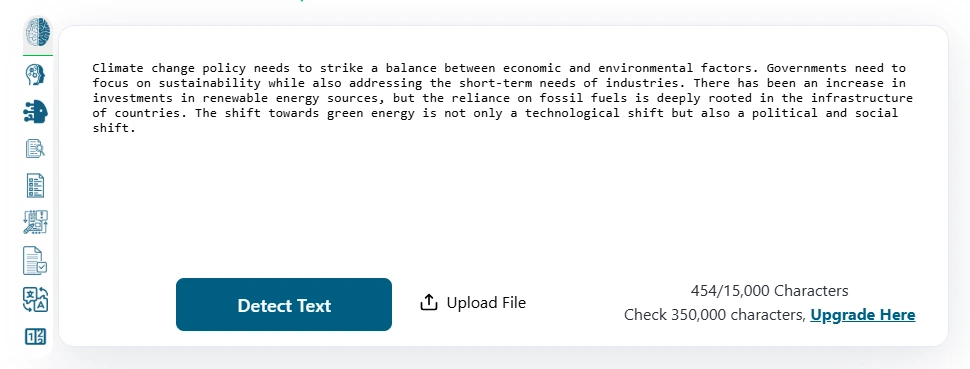
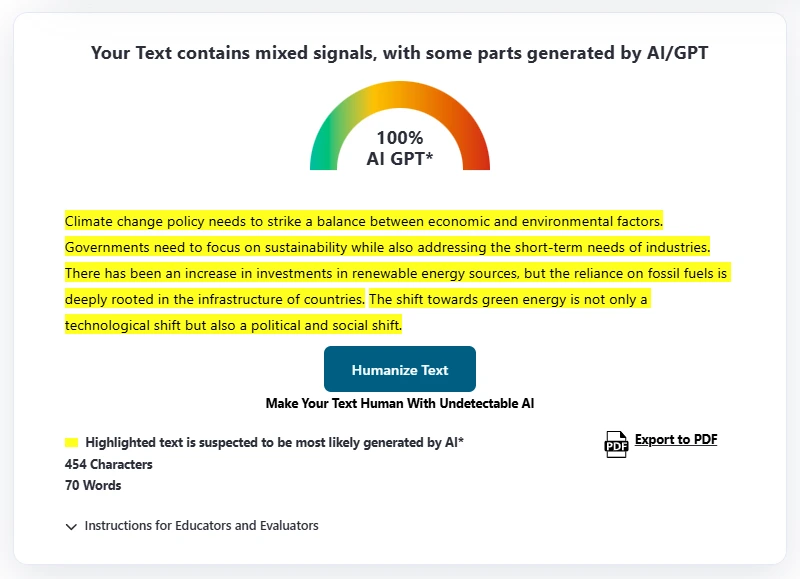
This was the most concerning result of the entire experiment.
The text was written manually without any AI assistance. It followed a formal academic tone, used structured arguments, and presented balanced analysis. Despite this, ZeroGPT returned a 100% AI probability score.
This indicates a severe false positive. In academic settings, a 100% AI score can trigger serious consequences, including integrity reviews or formal investigations. If fully human-written academic work is classified as entirely AI-generated, it raises serious questions about the reliability of the detection system.
One possible explanation is that ZeroGPT strongly associates structured academic writing with AI-generated patterns. Many high-performing students write in a consistent, logical, and formal style, which may resemble large language model outputs. If tone and clarity alone trigger a 100% AI score, the risk of misclassification becomes significant.
This result suggests the tool may be overly sensitive to academic structure rather than accurately identifying authorship.
Test Case 2: 100% AI-Generated Text
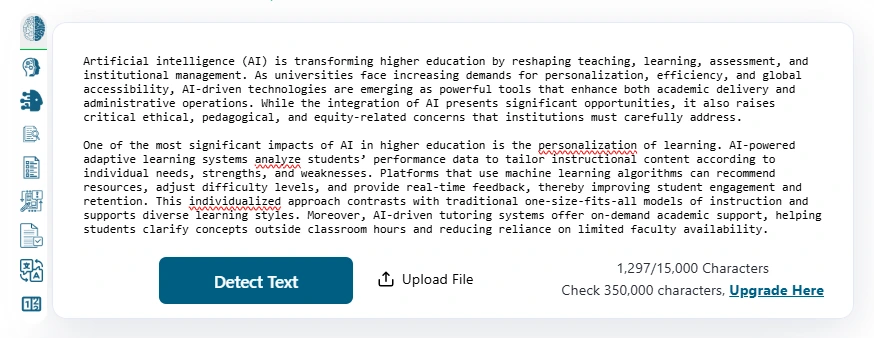
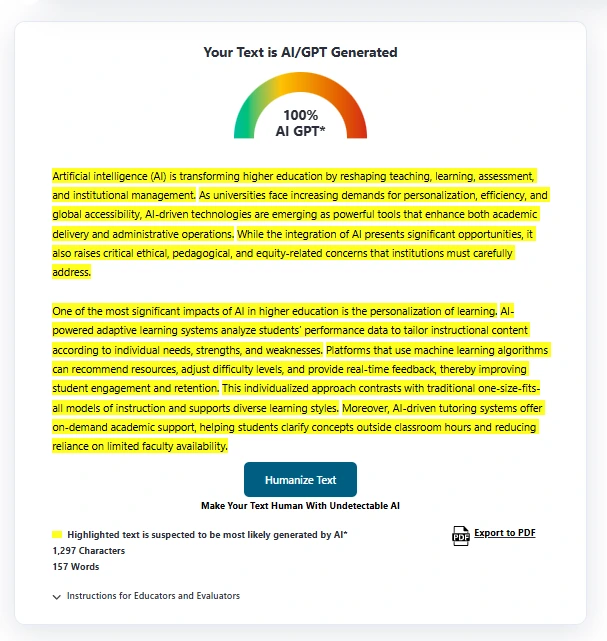
In this case, the result was expected. The content was generated entirely using an advanced AI model with no human editing. The 100% AI detection score aligns with the test conditions.
This shows that ZeroGPT can successfully identify clearly machine-generated content when it is used in its original form. The predictable sentence structure, uniform tone, and consistent flow likely made detection straightforward.
However, accuracy in identifying obvious AI-generated content is only one part of the equation. A reliable AI detector must also distinguish between human and AI writing with precision. When viewed alongside the previous test, where fully human-written content also received a 100% AI score, this result becomes less reassuring.
Detection systems must balance sensitivity with specificity. Without that balance, high detection rates may not equal high reliability.
Test Case 3: Lightly Edited AI Text
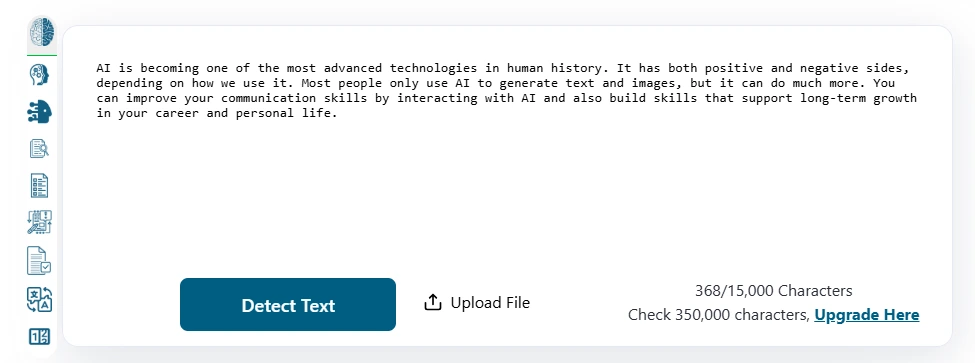
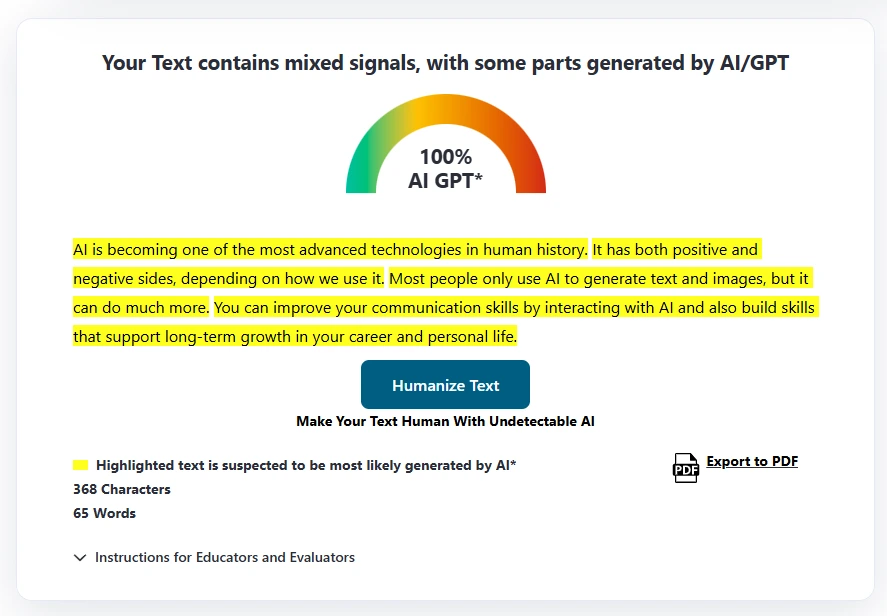
This outcome was unexpected.
The AI-generated content was manually edited to improve sentence variation, adjust phrasing, and slightly restructure key arguments. Despite these human modifications, ZeroGPT still returned a 100% AI score.
There are two possible interpretations. First, the edits may not have significantly altered the deeper linguistic patterns that the system analyzes. Second, the detection model may apply aggressive classification thresholds once certain AI indicators are triggered.
If small but meaningful human edits do not reduce the AI score at all, this suggests the model may rely on broader statistical markers rather than surface-level writing features. However, when considered alongside the fully human-written text also receiving a 100% AI score, a different concern emerges.
The tool appears highly sensitive but potentially lacks precision. When different types of content consistently produce identical extreme results, it becomes difficult to evaluate whether the detection system is distinguishing authorship accurately.
Overall Interpretation of These Three Results
Across all three tests, the outcome was identical:
- Fully human-written academic text: 100% AI
- Fully AI-generated content: 100% AI
- Lightly edited AI content: 100% AI
This lack of variation suggests limited differentiation between content types.
An effective AI detection tool should produce different probability ranges based on authorship patterns. When all content categories return the same maximum score, it raises concerns about over-detection and false positive risk.
In academic environments, this distinction is critical. AI detection should support integrity, not create uncertainty for students submitting genuine work.
These findings suggest that ZeroGPT’s scoring system may require cautious interpretation rather than blind trust in percentage outputs.
Strengths of ZeroGPT
ZeroGPT does have some clear advantages:
- First, it is easy to use. The interface is simple, and you can paste text instantly.
- Second, it provides quick results. Within seconds, you receive a detection percentage.
- Third, it highlights suspected AI sentences, which adds transparency.
- For casual checks or initial screenings, it performs reasonably well.
Weaknesses of ZeroGPT
Now for the limitations.
- The biggest issue is inconsistency. Minor editing can significantly change detection scores.
- Second, it lacks deep reporting. Compared to more advanced tools like a dedicated AI content detector, ZeroGPT does not provide detailed academic breakdowns.
- Third, it does not integrate robust plagiarism detection. AI detection and plagiarism are separate issues, and ZeroGPT primarily focuses on AI probability rather than citation analysis.
- Finally, false positives remain a risk, especially for academic or research-style writing.
Does ZeroGPT Detect Plagiarism?
This is a common misconception.
ZeroGPT is primarily an AI detection tool, not a comprehensive plagiarism checker.
AI detection identifies whether content appears machine-generated. Plagiarism detection checks whether text matches existing published sources.
They are not the same.
Understanding the different types of plagiarism is important if you are submitting academic work. Many students confuse AI-generated content with plagiarism, but they are distinct academic concerns.
If plagiarism detection is your priority, a dedicated free plagiarism checker may be more appropriate.
ZeroGPT vs Other AI Detectors
To understand if ZeroGPT is reliable, we need to compare it with competitors.
ZeroGPT vs GPTZero
GPTZero tends to provide more detailed breakdowns, but it can also generate false positives. Both tools struggle with edited AI text. If you want to see how they actually perform side by side, read a detailed comparison of GPTZero and ZeroGPT, including real test results, pricing, and reviews.
ZeroGPT vs Turnitin
Turnitin operates differently. It integrates AI detection within a broader plagiarism detection ecosystem. However, it is typically available only through institutions.
Students often look for a Turnitin alternative for students when institutional access is unavailable.
ZeroGPT vs Skyline Academic
When comparing ZeroGPT to Skyline Academic, the difference lies in depth and academic focus.
Skyline Academic provides:
- Detailed AI and plagiarism reporting
- Designed specifically for students and academics
- Affordable personalized plans
- Live tutoring support if students need guidance
It also combines AI detection with advanced plagiarism scanning through its AI content detector, offering more transparency than simple percentage-based tools.
For a full comparison, you can explore Turnitin vs GPTZero vs Skyline Academic to see how detection systems differ in academic reliability.
Can ZeroGPT Be Bypassed?
Yes, and this is important.
Paraphrasing tools, human editing, and rewriting techniques can reduce AI detection scores. Tools designed specifically to humanize AI content are increasingly popular.
For example, many students experiment with rewriting tools discussed in this StealthWriter AI review to lower AI detection percentages.
However, attempting to bypass detection can raise ethical and academic concerns. Universities are becoming more aware of manipulation techniques.
Is ZeroGPT Reliable for Universities in 2026?
The short answer: I wouldn’t suggest.
ZeroGPT can be a helpful preliminary tool. However, it should not be the sole basis for academic decisions.
Most universities:
- Use multiple detection systems
- Review writing history
- Consider contextual evidence
- Evaluate draft submissions
Relying on a single percentage score is risky.
If you are submitting academic work, combining AI detection with plagiarism analysis provides stronger protection. A tool that integrates both systems reduces uncertainty and false accusations.
FAQs About ZeroGPT Review
Is ZeroGPT accurate in 2026?
Based on practical testing, ZeroGPT may struggle with accuracy. In my experiment, fully human-written content, lightly edited AI content, and fully AI-generated content all received a 100% AI score. This raises concerns about false positives and over-detection.
Can ZeroGPT detect ChatGPT content?
Yes, ZeroGPT can detect clearly AI-generated content. However, in testing, it also labeled completely human-written academic text as 100% AI, which suggests the tool may lack precision in distinguishing authorship.
What is a good ZeroGPT score?
There is no universally “safe” ZeroGPT score. In my tests, even fully human-written content received a 100% AI probability. This suggests that scores should be interpreted cautiously rather than treated as definitive proof.
Is ZeroGPT better than GPTZero?
Both tools aim to detect AI-generated text, but reliability depends on differentiation accuracy. If a detector cannot clearly distinguish between human and AI writing, its practical value becomes limited, regardless of brand.
Does ZeroGPT detect plagiarism?
No, ZeroGPT focuses on AI detection, not plagiarism matching. Even if it flags content as AI-generated, it does not compare text against academic databases or published sources for similarity.
Do universities trust ZeroGPT?
Some educators may use it as an initial screening tool. However, given the risk of false positives and over-detection, universities typically rely on multiple tools and contextual review rather than a single AI score.
What is the best AI detector for students?
The best AI detector for students is one that balances AI detection with plagiarism analysis, provides detailed reporting, and minimizes false positives. A simple percentage score without contextual breakdown may not be sufficient for academic protection.