If you are wondering how to check an essay for plagiarism, the most reliable approach is to combine plagiarism checking tools with careful manual review. Running your essay through a checker helps identify similarities, but understanding and fixing those matches is what truly protects your academic integrity.
Plagiarism is more widespread than many students realise. Research shared by the International Center for Academic Integrity shows that 58% of students admitted to some form of plagiarism during their academic studies. This makes early detection essential, especially before final submission. A good starting point is using a free plagiarism checker for students to scan your work quickly and highlight potential issues while you still have time to correct them.
What plagiarism checkers really do
Plagiarism checkers work by comparing your essay against a vast database of online sources, academic papers, journals, and previously submitted content. They then generate a similarity report that highlights text matching other sources.
However, it is important to understand that a plagiarism report is not an accusation. It simply shows overlaps. Some of these overlaps may be completely acceptable, such as references, quotations, commonly used academic phrases, or properly cited material.
At the same time, plagiarism tools are not perfect. They may struggle to detect poorly paraphrased content where the wording is changed but the structure and ideas remain too close to the source. This is why relying on a tool alone is risky and why human judgement remains essential.
Step by step: how to check your essay for plagiarism properly
1) Finish your draft first (do not check mid sentence)
Plagiarism checking works best when the essay is complete. If you keep checking while the draft is messy, you will get lots of false alarms, especially on common phrases, headings, and references.
2) Run a first scan using a free tool
Start with a free tool to catch obvious issues fast. Paste your essay, run the scan, and save the report if possible. This helps you spot copy paste sections early.
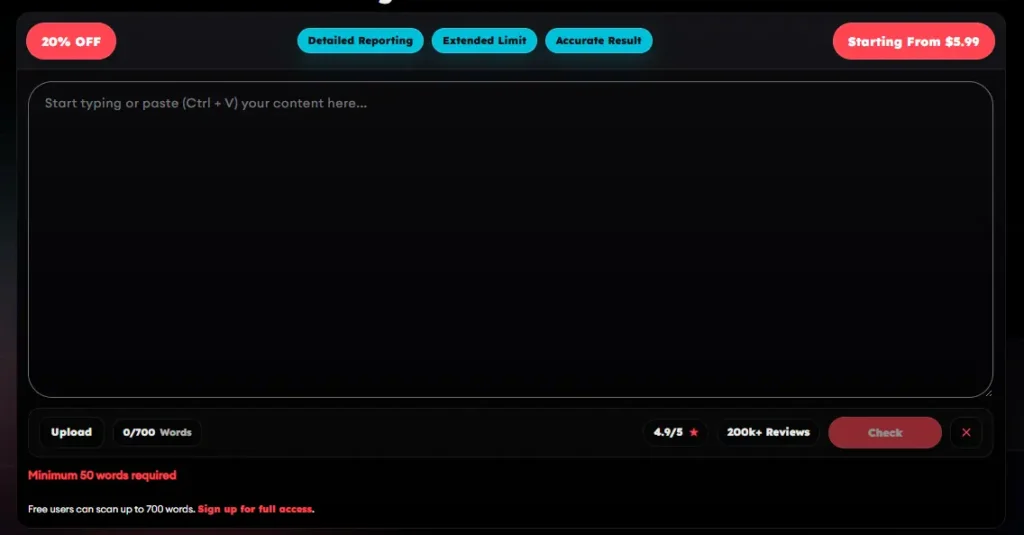
When you use a free tool, be careful about privacy. Avoid random websites that do not explain what they do with your text.
3) Read the report like a human, not like a robot
A similarity percentage alone does not tell the full story.
Look at:
- Which sentences are highlighted
- Whether the highlighted text is a quote, a citation, or your own writing
- Whether the tool is flagging your bibliography or common phrases
- Whether multiple matches come from the same source
A high similarity score can be fine if it is mostly references and properly quoted material. A low score can still hide plagiarism if you paraphrased badly.
4) Fix the real problems (the most common ones)
Here are the fixes students use most often:
Problem: missing citations
Fix: add an in text citation and reference entry.
Problem: quotation not marked properly
Fix: use quotation marks for short quotes, or block quotes if your style guide requires it, plus citation.
Problem: patchwork copying across many sources
Fix: rewrite the section from scratch using your own structure, then cite the sources you used.
Problem: paraphrasing too close to the original
Fix: change the sentence structure and the order of ideas, not just a few words, and cite.
If you want to understand what counts as plagiarism in different forms, read this guide on different types of plagiarism and pay special attention to subtle categories that students miss.
5) Recheck after editing
After you fix the highlighted areas, run the scan again. This second scan is where most students see the score drop and the matches become more acceptable.
Free vs paid plagiarism checkers: what is the real difference?
Free tools are great for quick screening, but paid tools usually offer bigger databases, better reports, and more controls.
Common differences include:
- Database size and quality
- Ability to exclude quotes, references, and small matches
- Report detail and source matching accuracy
- Privacy protections and file management
If you are unsure which approach fits your situation, this breakdown of free vs paid plagiarism checkers explains when free tools are enough and when paid tools make more sense.
Why manual review still matters
Even the best plagiarism checker cannot replace careful reading. A manual review helps you catch issues that software may miss, especially when paraphrasing is weak or ideas are too closely mirrored from a source. This is why many learners compare their drafts with examples from the best essay writing service for students to understand how original structure, proper citation, and academic tone should look in practice.
One useful technique is to take a highlighted sentence and compare it side by side with the original source. Ask yourself whether the structure, flow, and emphasis are genuinely different. If not, rewrite the section more thoroughly, focusing on expressing the idea in your own academic voice rather than relying on surface level wording changes.
Another issue that often appears is mosaic writing, where small fragments from multiple sources are stitched together. This form of plagiarism is particularly risky because it can pass casual checks while still violating academic integrity. Understanding how mosaic patterns form and how to fix them is explained clearly in this guide on mosaic plagiarism.
How to avoid plagiarism before it happens
The easiest way to deal with plagiarism is to prevent it during the writing process. Good note taking plays a major role. When researching, clearly separate direct quotations from paraphrased notes and your own ideas. This reduces the risk of accidentally copying text later.
Citing sources as you write is another effective habit. Waiting until the end increases the chance of forgotten references or unclear attribution. Adding citations immediately ensures accuracy and saves time during final checks.
Paraphrasing should also be done carefully. A strong paraphrase involves restructuring the sentence, reordering ideas, and expressing the concept in your own academic voice, while still acknowledging the original source.
Legal and academic consequences of plagiarism
Many students assume plagiarism is only a minor academic issue, but consequences can be serious. Penalties may include grade reduction, assignment failure, or even expulsion, depending on institutional policy.
In some contexts, plagiarism can also raise legal concerns related to copyright infringement. For a clear explanation of where academic misconduct ends and legal risk begins, this article on is plagiarism illegal or crime provides helpful context.
Plagiarism, AI tools, and modern academic writing
With the rise of AI writing tools, plagiarism concerns have expanded beyond copy paste detection. Universities now assess not only originality but also how tools like AI are used.
If you use AI for brainstorming or drafting, the safest approach is to rewrite the content fully in your own words, verify all facts, and cite real sources properly. Institutional policies differ, which is why understanding how AI use is evaluated is important.
You can learn more about this issue in is ChatGPT considered plagiarism. If you have encountered AI percentages or scores and are unsure what they mean, this explanation of AI detection score meaning will help you interpret reports accurately.
Final checks before submission
Before submitting your essay, take time to review it one last time. Ensure every borrowed idea is cited, every quote is clearly marked, and your paraphrasing reflects your own understanding rather than the source’s wording. A final plagiarism scan combined with careful proofreading significantly reduces risk.
If you are looking for additional academic tools and support to improve originality and confidence in your submissions, you can explore Skyline Academic for reliable student focused resources.
Frequently Asked Questions (FAQs)
What is the most reliable way to check plagiarism in an essay?
The most reliable method is to use a plagiarism checker alongside manual review to confirm that all matches are properly cited or rewritten.
Are free plagiarism checkers accurate enough?
Free plagiarism checkers are useful for basic detection, but they may miss content from paid academic databases or subtle paraphrasing issues.
Is there an acceptable plagiarism percentage?
There is no universal acceptable percentage. What matters is whether matched content is quoted, cited, and used correctly.
Can paraphrased content still be plagiarism?
Yes, paraphrasing can still count as plagiarism if the structure and ideas closely follow the original without proper citation.
Is self plagiarism considered academic misconduct?
Many universities treat reusing your own past work without permission as self plagiarism, so policies should always be checked.
Can AI generated content cause plagiarism issues?
AI generated content can lead to plagiarism or academic misconduct if it reproduces existing material or violates institutional rules.
What should I do if my similarity score is high?
Review the report carefully, identify genuine issues, correct citations or paraphrasing, and run a second scan before submitting.