
I still remember the exact feeling of opening an email that started with “I need to talk to you about your submission” and realizing, somewhere around the second sentence, that my professor thought I had used AI to write a paper I had spent two weeks actually writing. My stomach dropped. My first instinct was to type out a panicked, all caps reply. My second, thankfully, was to close the laptop and actually think for a minute.
If you are reading this because that exact thing just happened to you, take a breath. This is more common than you would think, and it is fixable. You are not the first student this has happened to, and you will not be the last. What you need right now is not panic, it is a plan, and that is exactly what this guide is.
What Actually Happens When You Get Flagged
Most AI accusations start the same way. A professor runs your paper through a detection tool as part of routine grading, the tool spits out a percentage, and that number crosses whatever threshold your school has decided counts as suspicious. From there, you usually get an email, a meeting request, or in the worst cases, a grade change with no warning at all.
Here is the part that surprises a lot of students. These tools are not lie detectors. They are pattern matching systems, and they get it wrong more often than most professors realize. If you want to understand exactly how do professors detect ai in the first place, it helps to know that most of them are relying on one or two automated tools, not a careful manual review, which is exactly why false flags happen as often as they do.
Detection software struggles in particular with certain kinds of writing, and this is well documented territory at this point. If you want the full picture on why this keeps happening to honest students, our breakdown of ai detection false positives goes deep into the research on this, but the short version is that clean, well structured, or non native English writing gets caught in the net constantly.
The First 24 Hours: What To Do Before You Panic
The first thing I want you to do is nothing dramatic. Do not fire off an angry email. Do not delete anything. Do not start rewriting the paper to make it sound more human, because that can actually look worse if anyone checks your edit history later. Just stop and give yourself a few hours to think clearly before you respond to anyone.
What you should actually spend that time on is simple. Go find every piece of proof you have that you wrote the thing yourself. That is the entire game here, and the sooner you start collecting it, the calmer the rest of this process feels.
It also helps to figure out, quickly, who you are actually dealing with. Some professors handle this informally and just want a conversation. Others are required to report every flag to a central academic integrity office the moment it happens, whether they personally believe you or not. If you are not sure which situation you are in, a short, polite email asking how they would like to proceed is a completely reasonable first move, and it buys you a little time to get organized before anything formal starts.
What Counts As Evidence, and Where To Find It
This is the part students get wrong the most. A lot of people assume the burden is on the professor to prove you cheated, and in a fair world that would be true, but in practice you will move through this so much faster if you show up with your own proof instead of just denying it and hoping they believe you.
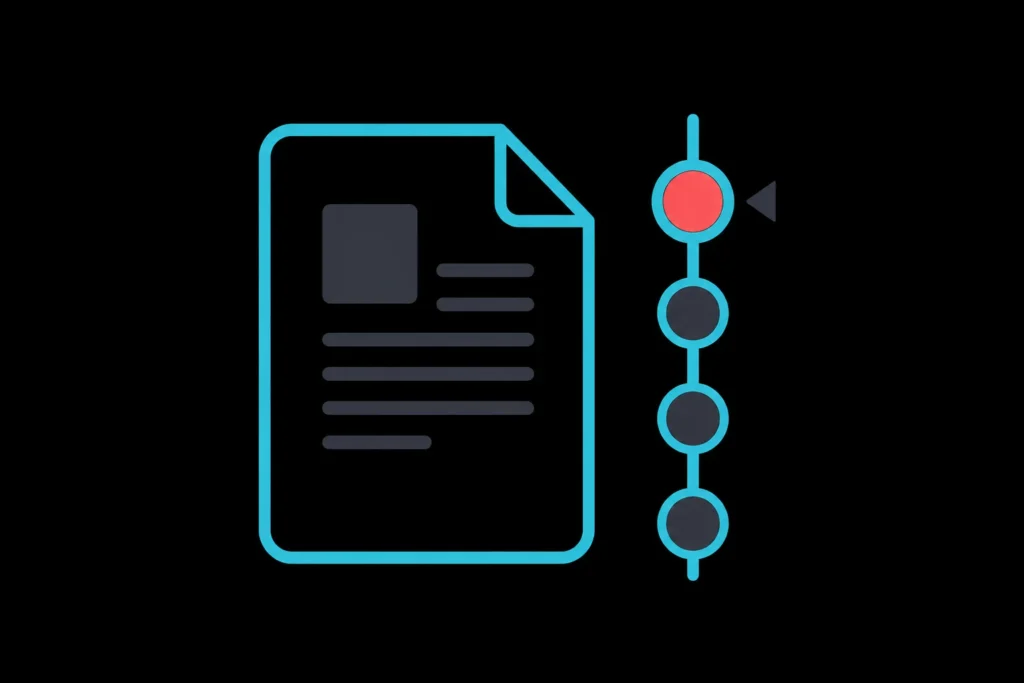
- The good news is that most students already have more evidence sitting around than they realize. It is just scattered across five different places instead of gathered in one folder.
- Draft history in Google Docs or Word, showing the paper being built over multiple sessions rather than appearing all at once.
- Timestamps on notes, outlines, or research documents that predate your final submission.
- Browser history or saved links to the sources you actually used, if you still have access to them.
- Screenshots of earlier drafts, especially ones with tracked changes, comments, or version names like draft two or final edit.
- Text message or email threads where you mentioned working on the assignment, which sound minor but add a believable timeline.
Google Docs is genuinely one of your best friends here, because it keeps a full version history automatically. Open the document, go to File, then Version History, and you can literally show a professor the paper being typed out in real time over multiple sittings. That single feature has saved more students than any argument ever could.
Before you walk into any conversation, it is also worth running your own paper through a detector yourself, so you know exactly what you are dealing with and are not caught off guard by a number you have never seen. Skyline Academic offers a free AI detection check for students, which is a genuinely useful first move here, since it lets you see your own score, understand which sections triggered it, and walk into the conversation already knowing your case instead of guessing.
Understanding Why You Got Flagged in the First Place
Before you talk to anyone, it helps enormously to actually understand the number that started this whole thing. A lot of students see a percentage and assume it is a straightforward guilt meter, when it is really nothing close to that. If nobody has walked you through what that number actually means, our guide to ai detection score breaks down exactly what a 20 percent versus an 80 percent score is actually telling you, and why neither one is proof on its own.
It also matters what your specific school considers a problem in the first place, since there is no universal cutoff everyone agrees on. Some institutions treat anything under 20 percent as noise, while others review anything above single digits. Knowing the acceptable ai percentage in universities at schools similar to yours can help you frame your conversation around realistic expectations instead of walking in assuming any flag at all is a disaster.
How This Actually Affects Your Academic Record
This is usually the question underneath all the other panic, even when students do not say it out loud. Does this follow me. Does it show up on my transcript. Does one email from one professor now define how every future school or employer sees me.
The honest answer is that it depends heavily on what stage this is at. A single professor flag that gets resolved through a conversation or a quick re-review almost never touches your permanent record at all, since it never became a formal case in the first place. That is exactly why moving fast and clearing things up early matters so much, it keeps the whole thing contained to one conversation instead of letting it escalate into paperwork.
A formal academic integrity case is a different story, and this is usually where a real record starts, though even then the consequences vary enormously by school. Some universities note a first time, resolved in the student’s favor outcome in an internal file that never leaves the registrar’s office. Others are more transparent about it if you ask directly. If this is weighing on you, do not guess, ask your academic integrity office plainly what gets recorded and for how long, since that answer is usually less scary than the version you have built up in your head.
How To Actually Talk To Your Professor
This conversation feels enormous in your head and is usually much smaller in reality. Professors deal with this more often than you would guess, and most of them genuinely do not want to fail an honest student. Your job is to make it easy for them to believe you, not to prove they are wrong for asking.
Start by staying calm and treating it as a conversation, not a fight. Saying something like, I understand why this got flagged, and I want to walk you through exactly how I wrote it, lands completely differently than opening with an accusation that the tool is broken. You want to be the reasonable person in the room, because that alone does a lot of the persuading.

Then walk through your process out loud. Explain how you researched the topic, roughly when you wrote each section, and any tools you did use, even something as small as a grammar checker or a citation generator. Being upfront about minor tools you used, even ones that had nothing to do with the accusation, tends to build trust rather than dig a hole.
Bring your evidence physically or have it pulled up and ready, not promised for later. A professor who sees your Google Docs version history open and scrollable right in front of them is a completely different experience than a professor who has to take your word for it and wait for you to send something after the meeting.
One thing worth avoiding entirely is attacking the detection tool itself as your main argument. Saying these tools are unreliable is true, but leading with it can come across as deflecting rather than engaging. Lead with your evidence first, and mention the limitations of detection software as supporting context, not your whole defense.
A Sample Email You Can Actually Send
Staring at a blank reply box while you are already stressed is its own special kind of miserable, so here is a template you can adapt rather than write from scratch. Swap in your own details, keep the tone, and send it once you have your evidence ready to attach or reference.
Subject: Regarding the AI flag on my submission
Hi Professor [Name],
Thank you for letting me know about this. I wrote this paper entirely myself, and I want to walk you through how I put it together rather than just telling you it is mine. I have my draft history in Google Docs showing the paper being written over several sessions, along with my research notes from before I started writing.
Would you be open to a short meeting, or would you prefer I send this evidence over by email first? I want to make this as easy as possible to look into.
Thanks for your time,
[Your name]
Notice what this does. It is short, it does not argue with the tool or the accusation, and it leads with a concrete offer of proof instead of a defensive explanation. That combination tends to get a faster, more reasonable response than a long email trying to argue your way out of it.
Mistakes That Make You Look Guiltier Than You Are
A few honest, well meaning reactions tend to backfire here, so it is worth knowing about them before you accidentally make one.
Going quiet for too long
Students who do not respond quickly, hoping the issue quietly resolves itself, often end up looking evasive by the time they finally reply, even if the delay was just stress and avoidance rather than guilt. A short response within a day or two keeps you looking engaged rather than dodgy.
Rewriting or heavily editing the flagged paper after the fact
It feels productive in the moment, like you are proving the writing can sound different, but it muddies your evidence and can look like you are covering something up rather than clarifying it. Leave the original document exactly as it is and build your case around it instead.
Getting defensive before you have shown any proof
Opening a conversation by insisting the tool is garbage and the professor is wrong to even ask puts them on the defensive too, and a defensive professor is a lot less likely to give your evidence a fair, open minded look. Save the skepticism about detection accuracy for later in the conversation.
Deleting drafts or clearing your history out of embarrassment or panic
This one is understandable but genuinely damaging, since it destroys the exact evidence that would have cleared you the fastest. Whatever you have, however messy it looks, keep it untouched.
Waiting to talk to anyone until you feel completely ready
Perfectionism costs you time here, and time is the one thing you cannot get back once a deadline passes. A short, imperfect response sent today beats a polished one sent after the appeal window closes.
Requesting a Re-Review: What That Actually Looks Like
A re-review is usually the fastest and least formal way to resolve this, and it is worth trying before you jump straight to a full appeal. In most cases it just means asking your professor directly to look at your paper again alongside the evidence you have gathered, rather than relying only on the automated score.
Keep your request short and specific. Ask clearly for a second look, name the evidence you are bringing, and suggest a quick meeting or a short written response, whichever fits how your professor usually communicates. Vague requests that just say please reconsider tend to get vague responses back, so be direct about what you are asking for and why.
If your professor agrees to a re-review and reverses the flag, get that outcome in writing somewhere, even if it is just a short confirmation email. It feels unnecessary in the moment, but grades and academic records get revisited later more often than students expect, and having a paper trail closes the door on this coming back up.
The Appeal Process: What To Expect
If a re-review does not resolve things, or your school skips straight to a formal process, you are looking at an academic integrity appeal. This sounds intimidating, but it usually follows a fairly predictable shape across most universities, even if the exact names of each step vary.
| Stage | What Happens | What You Should Bring |
| Initial notice | You receive formal written notice of the accusation, often from an academic integrity office rather than the professor directly | A calm, factual written response summarizing your process |
| Evidence submission | You submit documentation supporting your case, usually within a set deadline | Draft history, timestamps, notes, and your own detection check results |
| Hearing or review meeting | A committee or designated official reviews your case, sometimes with you present to answer questions | A short, organized summary of your evidence, not a long speech |
| Decision | You receive a formal outcome, which may include dismissal of the accusation, a lesser consequence, or in rare cases the original penalty upheld | Nothing new, just patience while it is processed |
Deadlines matter a lot more in this process than students expect. Most schools give you a fairly narrow window, sometimes as short as five to ten business days, to formally respond or request an appeal, and missing that window can close off options even if your case is strong. Check your student handbook or academic integrity office page the moment you get flagged, not after you have already spent a week gathering evidence.
It is also smart, once things settle down, to get ahead of this happening again. Running your work through one of the best ai detectors for students before you submit anything in the future gives you a heads up on your score while you can still adjust, rather than finding out after the fact through an email you did not see coming.
What If Your School Does Not Have a Formal Appeals Process
Smaller schools, individual departments, and some online programs sometimes do not have a dedicated academic integrity office at all, which can feel scarier, not less scary, because there is no clear path laid out for you. In that situation, your department chair or the dean of students office is usually the right place to start, even if the process feels improvised.
Ask directly who has final authority over the grade or the accusation, since that is not always the professor once things escalate. Put your request for review in writing by email regardless of how the conversation started, simply because a written record protects you if this drags on longer than expected.
What If The Appeal Does Not Go Your Way
Sometimes, even with solid evidence, an appeal gets denied. It happens, and it does not necessarily mean your case was weak, sometimes it just means the committee weighted things differently than you hoped. If this happens to you, ask specifically what the next level of appeal is, since most schools have more than one tier, even if nobody mentions that upfront.
This is also a moment where getting an outside opinion genuinely helps, mostly because you are too close to your own case to see it clearly anymore. A fresh set of eyes on your evidence and your written response can catch gaps you have stopped noticing after looking at the same documents for two weeks straight.
How Skyline Academic Can Help
If you have read this far, you are probably somewhere in the middle of this right now, not just reading out of curiosity. I get it, and this is exactly the kind of situation where having someone in your corner makes the whole process less lonely.
The most immediate thing Skyline Academic offers is a free AI detection check for students, and it is worth using before you send a single email. Running your paper through it yourself means you already know your score, which sections triggered it, and roughly how strong your case is, instead of walking into a conversation with your professor blind. It takes a few minutes and it can genuinely change how confident you feel going in.
Beyond that first check, having a second set of eyes on your writing and your evidence helps in a way that is hard to replicate on your own. Whether that means someone reviewing your draft history to help you organize it into a clear timeline, or just talking through how to phrase your email to a professor so it lands the right way, that kind of support turns a stressful, confusing process into something you can actually manage step by step. You do not have to piece this together alone at midnight with fifteen browser tabs open.
Protecting Yourself Going Forward
Once this particular situation is behind you, it is worth building a couple of small habits so you never have to go through this scramble again. None of these take much extra time, and all of them make you nearly bulletproof if it ever comes up a second time.
- Write in Google Docs by default for anything graded, since the automatic version history is doing free evidence collection for you in the background without any extra effort.
- Keep a simple research log for longer papers, even just a running note of which sources you read and when, since it doubles as a timeline if anyone ever questions your process.
- Save outlines and early drafts in a separate folder instead of overwriting them, so there is always a visible trail from rough notes to finished paper.
- Run a quick detection check on your own work before submitting anything you are unsure about, so a high score never blindsides you after the fact.
None of this is about proving you are innocent in advance for every assignment forever. It is just about making sure that if a flag ever does happen again, you already have everything you need sitting in one place instead of scrambling to reconstruct two weeks of work from memory.
Final Thoughts
Getting flagged for something you did not do is genuinely one of the more stressful things that can happen in college, and I am not going to pretend the process of proving your innocence is fun. It is a hassle, it takes time you would rather spend on literally anything else, and it forces you to defend work you already put real effort into.
But it is also very winnable, especially if you move quickly, stay calm, and gather your proof before you say much of anything to anyone. Most of these situations resolve in the student’s favor once real evidence enters the conversation, because most professors are not looking for a reason to fail you, they are just following a process that started with an imperfect tool. Give them a reason to believe you, and this becomes a stressful week rather than a lasting problem.
Frequently Asked Questions
What counts as evidence if I am falsely accused of using AI?
Draft history, version timestamps, research notes, and outlines that predate your final submission all count as strong evidence. Google Docs version history is especially useful since it shows the paper being written in real time across multiple sessions.
Can requesting an appeal make my situation worse?
In most cases, no. A calm, evidence based appeal is treated as a normal part of the process rather than a red flag, and schools generally expect students to defend themselves when they believe an accusation is wrong.
How long does an academic integrity appeal usually take?
It varies by school, but most processes take anywhere from one to four weeks depending on committee schedules and how quickly you submit your evidence. Checking your specific deadlines early helps avoid unnecessary delays.
What if my school does not have a formal AI appeal process?
Reach out to your department chair or the dean of students office directly, since someone still holds final authority over the grade even without a dedicated process. Put your request in writing so there is a clear record either way.
Should I involve a parent or academic advisor in an AI accusation?
It can genuinely help, especially for a first time accusation, since an advisor often knows your school’s specific process better than you do. There is no rule against getting support, and having someone in your corner tends to reduce panic driven mistakes.
What happens if my appeal is denied?
Ask what the next level of appeal is, since many schools have more than one tier even if it is not obvious at first. A denial at one stage does not always mean the process is over.
Can Google Docs version history actually prove I did not use AI?
It is one of the strongest pieces of evidence available, since it shows your document being built gradually over time rather than pasted in all at once. It will not always be treated as absolute proof, but it carries real weight in most reviews.
Do professors know AI detection tools can be wrong?
Many do, especially at schools where false positives have already come up before, but not all of them are equally familiar with the research. Bringing a brief, clear explanation of detection limits, alongside your own evidence, helps close that gap.
Is it worth requesting a re-review before filing a formal appeal?
Almost always, yes. A re-review is faster, less formal, and often resolves the issue without ever needing a full appeal, so it is usually the first step worth trying.
Can a false AI accusation actually lead to expulsion?
In serious or repeated cases it theoretically can, but a single false flag rarely escalates that far, especially when a student responds quickly with solid evidence. Most first time cases end in the accusation being dismissed or reduced once the process plays out.