If you used ChatGPT at any point while working on an assignment, even just to brainstorm or check your grammar, there is a good chance you have typed some version of this question into Google at 1 a.m. It is a fair thing to want to know before you submit, not after.
The honest answer is not a simple yes or no, even though most search results will hand you one. Turnitin does not detect ChatGPT specifically, the way a lie detector might catch one particular liar. What it detects is a pattern, a set of statistical fingerprints that show up in writing produced by large language models generally, whether that is ChatGPT, Claude, Gemini, or something else entirely. Understanding that distinction is the difference between panicking over a number and actually knowing what it means.
This matters just as much if you never touched an AI tool at all. Plenty of students who wrote every word themselves have still opened a report and seen a number that made their stomach drop, simply because their writing style happened to overlap statistically with patterns the model associates with AI text. Knowing how the tool actually works protects you either way, whether you used ChatGPT and want to understand your real risk, or you did not and want to know why a flag showed up anyway.
What Does Turnitin Detect ChatGPT Actually Mean
When people ask whether Turnitin can detect ChatGPT, they usually mean one of two different things, and the answer changes depending on which one they are actually asking.
The first version of the question is whether Turnitin can tell that a specific piece of text came from ChatGPT as opposed to some other AI tool. It cannot. Turnitin has no access to your ChatGPT account, your prompt history, or any session logs. It never sees what you typed into the chat window, only the final text you submitted.
The second version of the question, and the one that actually matters, is whether Turnitin can tell that a piece of writing was likely produced by some large language model, regardless of which one. That answer is yes, with real limitations. Turnitin’s AI writing detector was built specifically to catch statistical patterns common to GPT based models and other large language models, and it has expanded coverage as newer model versions have been released.
How Turnitin’s AI Detection Actually Works
Turnitin does not read your paper the way a professor does, looking for meaning or argument quality. It breaks your document into overlapping segments, usually a handful of sentences at a time, and runs each segment through a model trained to recognize the writing patterns typical of large language models.
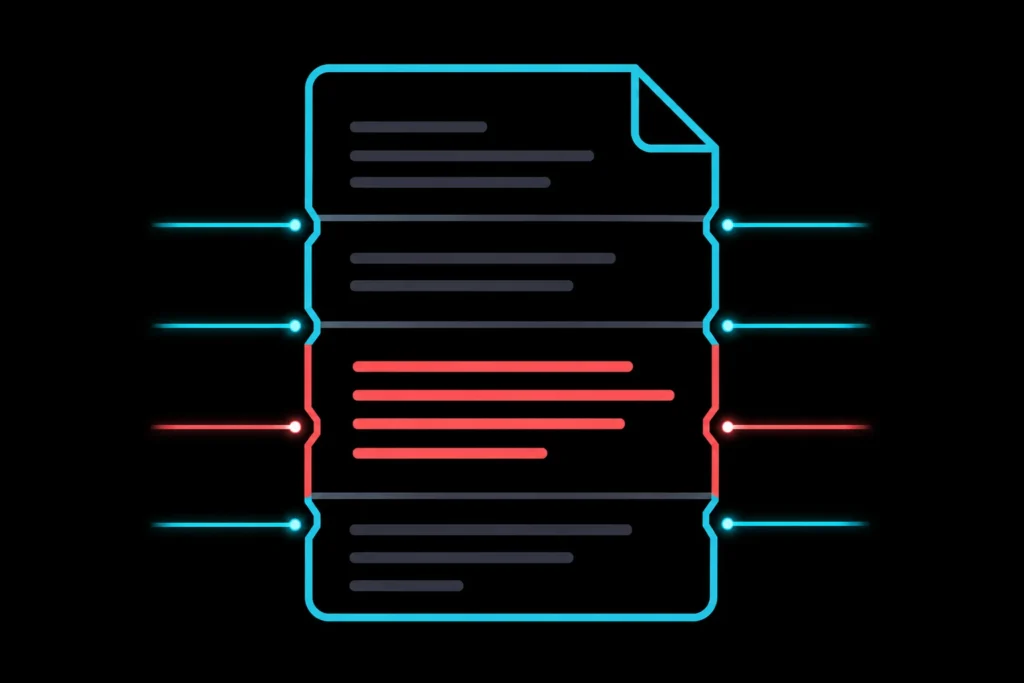
Each sentence gets an internal score reflecting how likely it is to have been AI generated, based on things like how predictable the word choices are and how much sentence length and rhythm vary across the passage. Those sentence level scores get combined into the single percentage you actually see on the report.
It needs a minimum amount of text to work
This is a detail a lot of students miss. Turnitin’s AI detector only evaluates prose sentences within long form writing, and it generally needs a minimum of around 300 words of continuous prose to return a meaningful score. Short answers, bullet points, headers, quotations, and your reference list are excluded from the calculation entirely.
It is a probability, not a fingerprint
The percentage you see is not a confession. It is the model’s estimate of how much of your document statistically resembles typical AI output. That distinction matters enormously, because a probability can be wrong in both directions, flagging genuine human writing and missing genuinely AI generated text.
The AI Score vs the Similarity Score
One of the most common points of confusion is mixing up Turnitin’s AI writing indicator with its long standing plagiarism tool. They are completely separate systems measuring completely different things, and understanding the reality behind ai detection score is the first step to actually making sense of your report instead of just panicking at a number.
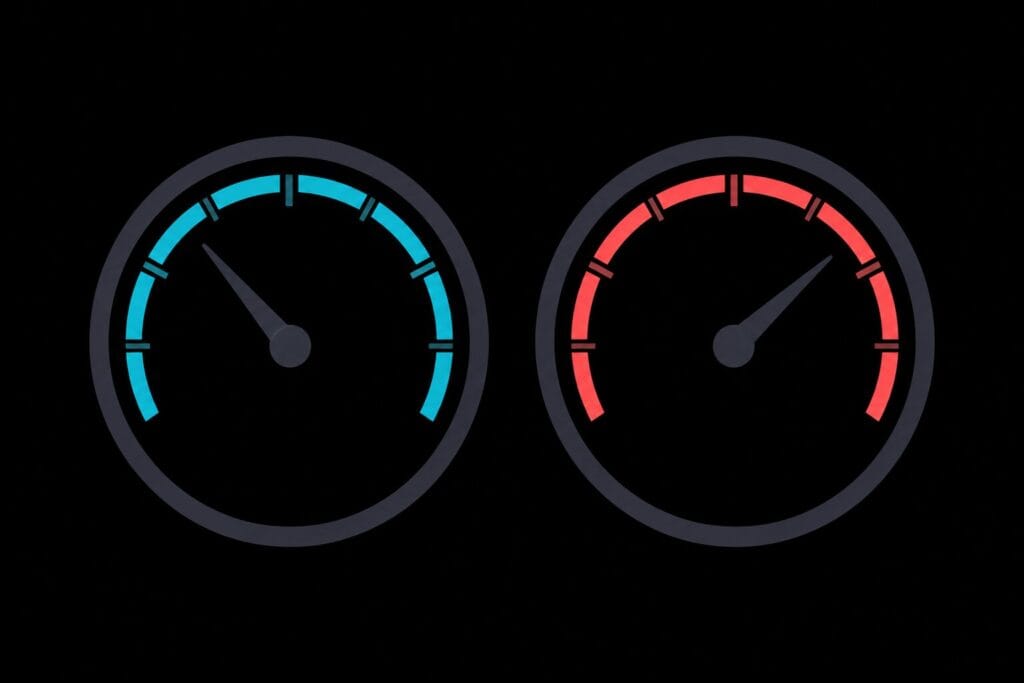
The similarity score compares your submission against a massive database of existing student papers, journals, and web content to find matching or closely paraphrased text. The Turnitin similarity score and the AI writing percentage can both appear on the same report, but a high score on one does not mean anything about the other. You can have a 0 percent similarity score and still get flagged for AI writing, because AI generated text can be entirely original and still statistically resemble machine output.
Can Turnitin Tell the Difference Between ChatGPT, Claude, and Gemini
No, and this is worth repeating because it comes up constantly. Turnitin’s model looks for patterns common across large language models broadly. It does not attribute a flagged passage to a specific product, and it cannot confirm which tool, if any, was actually used.
Practically speaking, this means a paper written with Claude or Gemini can get flagged just as easily as one written with ChatGPT, and a professor who tells a student they detected ChatGPT specifically is technically overstating what the tool actually reported. The more accurate description of any flag is that the passage statistically resembles typical large language model output, not that a specific AI product was identified.
How Accurate Is Turnitin’s AI Detection, Really
Turnitin has publicly stated it aims to keep its false positive rate, meaning fully human writing incorrectly flagged as AI, under 1 percent for documents scoring above its main reporting threshold, based on Turnitin’s own published guidance. The company also says it retests this figure regularly against hundreds of thousands of academic papers written before ChatGPT existed, using them as a clean human only baseline.
That number sounds reassuring, and in a lot of ways it genuinely is compared to some of the newer, less established AI detectors on the market. But a few things are worth holding in your head at the same time.
● The under 1 percent figure applies specifically to documents scoring above the main reporting threshold, not to every score you might see on a report.
● Independent researchers have found meaningfully higher false positive rates in certain populations, particularly for writing that reflects non native English patterns.
● Turnitin’s own accuracy trade off means it can miss a real chunk of genuinely AI generated text in order to keep false accusations low, so a low score is not automatically a clean bill of health either.
Several universities, including Vanderbilt, temporarily disabled Turnitin’s AI detection tool in 2023 specifically over concerns about reliability, and the debate over how much institutions should lean on a single score has continued since, as covered in independent testing and reporting on the tool. That history is worth knowing, because it means your own school’s policy on how it treats a Turnitin AI score can vary a lot depending on how much confidence your institution currently places in the tool.
| What Turnitin Claims | What Independent Testing Suggests | What This Means for You |
| Under 1% false positive rate above the main reporting threshold | Higher false positive rates reported in some populations, notably non native English writers | A flag is a signal worth investigating, not a verdict |
| Detects patterns from GPT based and other large language models | Cannot confirm which specific AI tool was used | A report saying it caught ChatGPT is technically imprecise language |
| Requires roughly 300 words of continuous prose to score | Short or heavily quoted documents may not generate a reliable score at all | A missing or low score on a short submission isn’t necessarily meaningful either way |
Why Editing or Paraphrasing AI Text Changes the Score
A paper that starts as raw, unedited ChatGPT output tends to score very high, often above 90 percent, because unedited AI text is extremely consistent in word choice and sentence rhythm, exactly the pattern the detector is trained to catch.
Once a student starts editing that text, rewriting sentences, varying structure, adding their own examples, the score tends to drop, sometimes dramatically. This is not a loophole so much as a reflection of what the tool is actually measuring. Heavy human editing genuinely does make writing statistically resemble human writing more closely, because at that point a meaningful amount of the actual sentence construction is human. Where this gets murky is the large middle ground of moderately edited AI text, which can land anywhere in the 50 to 80 percent range depending on how much was actually changed.
What Increases Your Risk of a False Flag
A false flag is exactly what it sounds like, genuinely human written work that gets caught in the net anyway. It happens more than most students realize, and it is not evenly distributed across every kind of writing.
A closer look at ai detection false positives shows a consistent pattern across independent research. Writing that is unusually uniform in sentence length, heavily templated, or written by non native English speakers tends to trigger flags at a noticeably higher rate than typical native English student writing. So does writing that has been run through a grammar or paraphrasing tool one too many times, since that kind of heavy polishing can flatten a writer’s natural variation in ways that statistically resemble AI output.
Detection risk also shifts by discipline
Students in different majors run into this problem for different reasons, and it helps to know where your own field tends to sit.
- STEM and technical writing often follows rigid, formulaic structures, methods sections, lab reports, standardized formatting, which can read as unusually uniform even when every word is genuinely the student’s own.
- Business and economics writing frequently uses stock phrasing and templated structures taught explicitly in coursework, which can push scores higher for entirely legitimate reasons.
- Humanities and social science writing tends to be more exploratory and varied in sentence structure by nature, which generally scores lower, though heavily polished argumentative essays can still land in a flagged range.
None of this means one discipline is safer than another in any absolute sense. It just means the reasons behind a flag can look completely different depending on what you are studying, which is worth keeping in mind before assuming the worst.
Common Myths About Turnitin and ChatGPT
A lot of confusion around this topic comes from a handful of myths that keep circulating among students, usually secondhand from a friend of a friend rather than from anything Turnitin has actually published.
Myth 1: Turnitin can see your ChatGPT chat history. It cannot. The tool only ever sees the text you actually submit, never your prompts, your account activity, or anything from outside the document itself.
Myth 2: A 0 percent AI score means the tool actively found nothing suspicious anywhere. In reality, very short submissions or documents made up mostly of quotations and headers may simply not generate a meaningful score at all, rather than an actively clean result.
Myth 3: If Turnitin flags you, your professor automatically fails you. Turnitin’s own guidance frames the score as one input into a human decision, and how much weight any single professor actually gives it varies enormously.
Myth 4: Using a grammar checker or spell checker will get you flagged the same way AI writing would. Basic proofreading tools generally do not restructure your sentences enough to trigger a meaningful shift in the score, unlike heavier AI paraphrasing tools.
Myth 5: Turnitin’s AI detector is brand new and untested. The tool launched in April 2023 and has been updated repeatedly since, including expanded coverage for newer model versions like GPT-4 and GPT-4o.
How Professors Actually Use This Score
Turnitin’s own guidance is explicit that the AI score is meant to inform a professor’s judgment, not replace it. In practice, that guidance plays out very differently from one instructor to the next, which is part of why how professors detect ai in the first place matters just as much as the score itself. Some professors treat any flag as an automatic conversation starter and nothing more. Others treat a high score as close to conclusive, especially if their department has limited guidance on how to interpret the report responsibly.
What this means practically is that the same score can lead to wildly different outcomes depending entirely on which professor happens to be reading it, which is frustrating but also useful to know, since it tells you that your best move after a flag is rarely to argue with the tool itself and almost always to engage directly and calmly with the actual person making the decision.
What To Do If You Get Flagged
If a Turnitin AI score comes back higher than you expected on genuinely original work, the instinct to panic is completely understandable, but the practical steps here are fairly manageable if you move quickly and calmly.
- Pull together your draft history, notes, or outline, anything with a timestamp that shows the paper being built over time rather than appearing all at once.
- Ask to see the actual report rather than just the headline number, since the sentence level breakdown can show you exactly which passages triggered the flag.
- Request a conversation with your professor before assuming the worst, and be ready to walk them through your process clearly and without getting defensive.
If you are already dealing with this exact situation right now, our full walkthrough on what to do if you are falsely accused of using ai covers the entire process in detail, including how to request a re-review, what evidence actually holds weight, and what a typical appeal looks like if the conversation with your professor does not resolve things on its own.
Frequently Asked Questions
Can Turnitin actually tell if I used ChatGPT specifically?
No. Turnitin detects general patterns associated with large language model writing, but it has no way to confirm which specific AI tool, if any, produced a passage. A flag means the text statistically resembles typical AI output, not that ChatGPT in particular was identified.
Does Turnitin detect AI writing that has been edited or paraphrased?
It can, though the score usually drops as more genuine human editing is applied. Lightly edited AI text often still scores high, while heavily rewritten text can land much lower, since the underlying sentence construction becomes more human.
How accurate is Turnitin’s AI detector compared to other tools?
Turnitin publishes a false positive rate under 1 percent above its main reporting threshold, which is generally considered strong compared to many newer AI detectors. That said, independent testing has found higher false positive rates in specific populations, so no detector should be treated as fully accurate.
What is the difference between the AI score and the similarity score on Turnitin?
The similarity score checks for matching or closely paraphrased text against existing sources, while the AI score estimates how much of the writing resembles large language model output. A paper can score high on one and low on the other, since they measure completely different things.
Can Turnitin detect ChatGPT if I only used it for brainstorming or outlining?
Usually not, as long as the actual sentences in your final submission were written by you. Turnitin analyzes the text you submit, not how you developed your ideas, so using AI purely for planning generally will not show up as flagged prose.
Why did my genuinely human written essay get flagged as AI?
This is a known limitation called a false positive, and it happens more often with unusually uniform writing, heavily templated structures, or non native English patterns. It is a real risk with every detector, not evidence that something was done wrong.
How many words does Turnitin need to generate an AI score?
Turnitin’s AI detector generally requires a minimum of around 300 words of continuous prose to return a meaningful score, and it excludes headers, quotations, and reference lists from that calculation.
Does a low AI score mean my paper is definitely safe?
Not with complete certainty. Turnitin’s own accuracy trade off means it can miss a portion of genuinely AI generated text in order to keep false accusations low, so a low score is reassuring but not an absolute guarantee.
Can professors see exactly which sentences triggered the AI flag?
Yes, Turnitin’s report typically includes a breakdown showing which specific sentences or passages contributed most to the overall AI percentage, which is useful information to request if you ever need to understand or dispute a score.
Should I panic if Turnitin flags my paper for AI writing?
No. A flag is a starting point for a conversation, not a final judgment, and plenty of students clear this up quickly with the right evidence and a calm conversation with their professor.
Final Thoughts
Does Turnitin detect ChatGPT? The honest, complete answer is that it detects patterns common to large language model writing in general, with real strengths and real blind spots, and it cannot tell you which specific tool, if any, actually produced a piece of text.
That nuance matters more than the simple yes or no most students are looking for, because it changes how much weight a single score should actually carry. Treat a Turnitin AI percentage as one data point worth understanding, not a verdict handed down by an infallible machine, and you will be in a much better position to respond calmly and clearly if your own number ever comes back higher than you expected.