
If you are searching is QuillBot AI Detector accurate, chances are you are not just casually curious. You probably have an essay, assignment, report, or blog sitting in front of you, and one AI detection score has suddenly made you question your whole existence.
I get it.
AI detectors have become one of those tools students use with hope, fear, and a tiny bit of panic. You paste your work, click the button, wait a few seconds, and then the tool gives you a percentage that can either calm you down or ruin your afternoon.
So, I decided to test the QuillBot AI Detector myself.
For this QuillBot AI Detector review, I checked how the tool reacted to ChatGPT-generated content, paraphrased AI content, rewritten content, and human-written content. I also looked at QuillBot reviews from Trustpilot and Reddit screenshots to understand what real users are saying outside polished marketing pages.
The goal is simple: to answer whether QuillBot AI Detector is actually accurate, whether students should trust it, and what to do if it gives you a scary AI score.
Quick Answer: Is QuillBot AI Detector Accurate?
QuillBot AI Detector can be accurate in simple cases, especially when the content is clearly AI-generated. In my testing, it correctly marked direct ChatGPT-generated content as 100% AI. It also detected paraphrased AI content as AI, which was interesting because many students assume paraphrasing automatically removes AI detection risk.
However, I would not say QuillBot AI Detector is perfect.
Like most AI detectors, it works by estimating probability, not by proving who or what wrote the text. That means it can be helpful as a first check, but it should not be treated as final evidence. This is especially important for academic work, where one wrong interpretation can create unnecessary stress for students.
Here is the quick summary of my test:
| Test Type | QuillBot Result | My Take |
| Direct ChatGPT content | Marked as 100% AI | Strong result for obvious AI content |
| Second ChatGPT content | Marked as 100% AI | Consistent in simple AI testing |
| Paraphrased AI content | Marked as 100% AI | Rewording did not remove AI signal |
| Human-written content | Marked as human | Good sign, but not universal proof |
| Rewritten human content | Grey area | Needs careful interpretation |
| Trustpilot reviews | Mixed | Some praise it, others complain |
| Reddit discussions | Mixed and cautious | Many users are unsure whether to trust AI scores |
So, is QuillBot accurate for AI detector checks?
It can be useful, but it is not a final judge. I would use it as a quick warning system, not as the only source of truth.
Key Takeaways
Before going deep into the testing, here are the main points:
| Question | Simple Answer |
| Is QuillBot AI Detector accurate? | Sometimes, especially for obvious AI text |
| Can QuillBot detect ChatGPT? | In my test, yes, very clearly |
| Can QuillBot detect paraphrased AI content? | In my test, yes |
| Can QuillBot be wrong? | Yes, like any AI detector |
| Should students rely on it alone? | No |
| Is it useful before submission? | Yes, as a first check |
| Best approach | Use AI detection plus human academic review |
The biggest thing I learned is that AI detection scores need context. A 100% AI score looks scary, but it still needs interpretation. A 0% AI score looks comforting, but it does not automatically mean the work is perfect. And if a tool gives you mixed results, that does not always mean your essay is doomed.
It usually means you need to understand the writing better.
If you want a deeper explanation of how these tools behave, Skyline Academic has a useful guide on the accuracy of ai detectors, which explains why different AI checkers can produce different scores for the same text.
What Is QuillBot AI Detector?
QuillBot AI Detector is a tool that checks whether a piece of writing looks human-written or AI-generated. You paste text into the detector, and it gives you a result showing how much of the content appears to be AI-written.
Students usually use the QuillBot AI Checker before submitting essays, assignments, reports, discussion posts, personal statements, or coursework. Writers use it to check blogs, marketing content, and web copy. Teachers may use similar tools to understand whether a submission appears AI-generated.
The tool is part of the larger QuillBot platform, which is already known for paraphrasing, grammar checking, summarizing, citation help, and writing support. Because QuillBot is popular among students, its AI detector naturally gets a lot of attention.
But popularity and accuracy are not the same thing.
A tool can be easy to use and still produce confusing results. It can detect obvious AI content well but struggle with edited, paraphrased, or highly polished academic writing. That is why I wanted to test it practically instead of just repeating what the website says.
Why Students Search “Is QuillBot AI Detector Accurate?”
Students search this because AI detection has become stressful.
A few years ago, students mostly worried about plagiarism. Now they worry about plagiarism, similarity scores, AI scores, paraphrasing tools, Turnitin, false positives, and whether their normal writing style sounds “too AI.”
That is a lot for one essay.
The real problem is that many students do not fully understand what AI detection scores mean. A student may write the assignment honestly, check it through an AI detector, and suddenly see a high AI percentage. That can create panic, even when the work is genuinely theirs.
This is where the truth behind ai detection scores becomes important. An AI score is not the same as plagiarism evidence. It is not a confession. It is not a guarantee that the text was written by ChatGPT. It is a prediction based on language patterns.
That prediction can be useful, but it can also be wrong.
Students usually want answers to questions like:
| Student Question | Why It Matters |
| Is QuillBot AI Detector accurate? | They want to know if the score can be trusted |
| Can QuillBot detect ChatGPT? | They are worried about AI-generated drafts |
| Can human writing be flagged as AI? | They fear false accusations |
| Is QuillBot better than Turnitin? | They want to compare academic tools |
| What should I do if my essay is marked AI? | They need a practical next step |
And honestly, these are fair questions.
When your grade is involved, “maybe accurate” is not very comforting.
My QuillBot AI Detector Testing Method
For this review, I tested the QuillBot AI Content Detector using a practical student-focused method. I was not trying to create a laboratory-level scientific study with hundreds of samples. I wanted to test the kind of situations students actually face.
So, I checked:
- Direct ChatGPT-generated content
- A second AI-generated sample
- Paraphrased AI content
- Human-written content
- Human content rewritten by ChatGPT
- Trustpilot review screenshots
- Reddit discussion screenshots
The reason for using different content types is simple. AI detection is easy when the text is obviously AI-generated. The real challenge starts when text is paraphrased, edited, rewritten, or mixed with human input.
That is where students usually get confused.
Also, I looked at review screenshots because tool testing alone does not tell the full story. A detector may work in my sample but still frustrate many users in real life. Public reviews help show whether users are satisfied, confused, angry, or somewhere in the middle.
Test 1: ChatGPT-Generated Content on QuillBot AI Detector
For the first test, I used content generated directly by ChatGPT. This was the easiest test for QuillBot because the writing was not heavily edited or rewritten. If an AI detector is working reasonably well, it should be able to identify direct AI-generated content.
And that is exactly what happened.
QuillBot marked the ChatGPT-generated content as 100% AI.
That is a strong result. It suggests that QuillBot can detect obvious AI writing patterns when the text comes directly from a tool like ChatGPT. However, this does not automatically mean it will perform perfectly on every essay, report, or rewritten paragraph.
The ChatGPT Prompt I Used for the AI Content Test
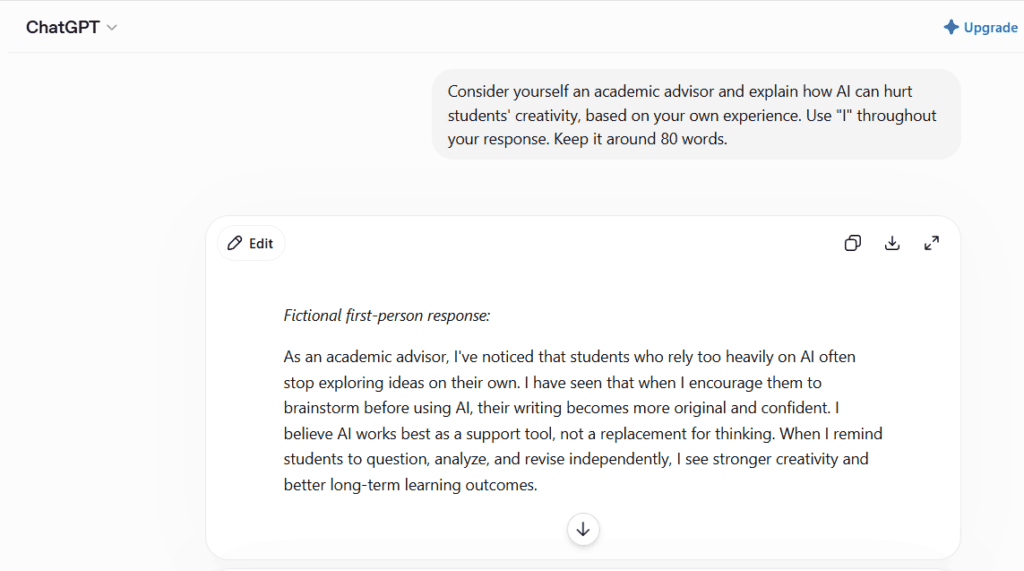
This screenshot shows the original ChatGPT prompt used to generate the test content. I included this because a review feels incomplete if readers cannot see where the tested content came from. Since the content was generated directly through ChatGPT, QuillBot had a clear AI-written sample to analyze. In this kind of test, a good AI detector should ideally flag the content as AI. This gives us a simple starting point before moving into harder tests like paraphrased and rewritten content.
Pasting ChatGPT Content into QuillBot AI Detector
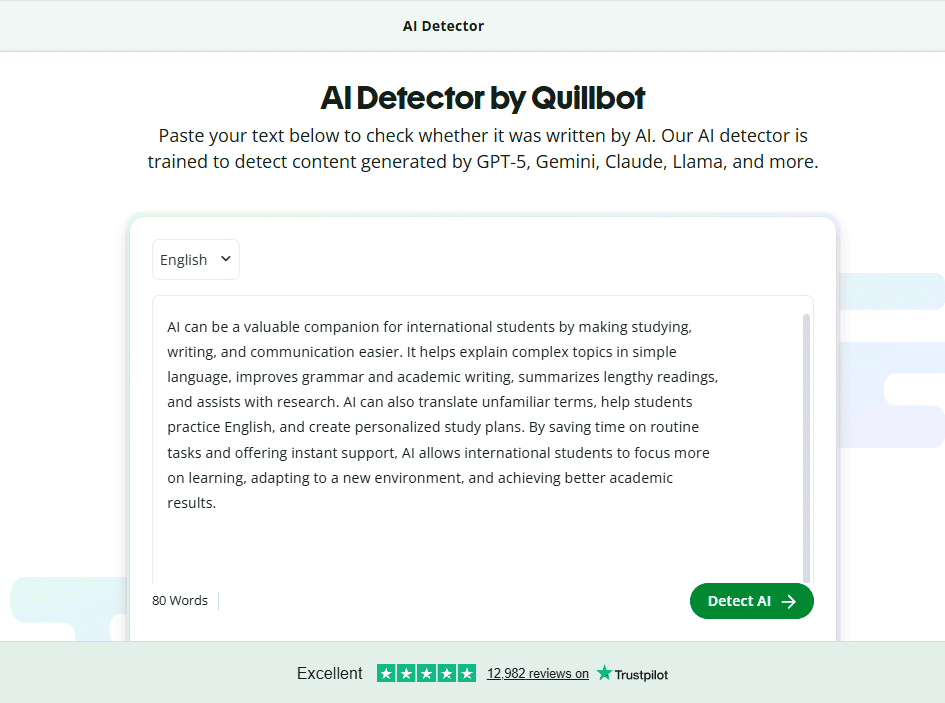
This screenshot shows the ChatGPT-generated content being placed into the QuillBot AI Detector. I did not heavily edit or rewrite the sample before testing it, because the goal was to see whether QuillBot could detect clear AI writing. This makes the test straightforward and fair. If the detector struggled here, that would raise serious concerns. But in this case, QuillBot handled the obvious AI sample strongly.
QuillBot Marked the ChatGPT Content as 100% AI
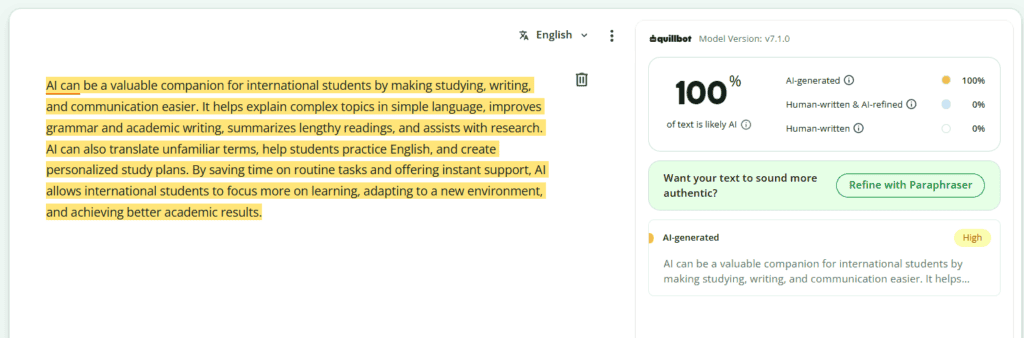
This result was exactly what I expected from a strong AI detector. QuillBot marked the direct ChatGPT content as 100% AI, which suggests it can detect obvious machine-generated writing. For students, this means copying AI-generated content directly into an assignment is risky. However, one correct result does not prove the tool is always accurate. It only shows that QuillBot performed well in this specific direct AI test.
A Second AI Content Test Also Came Back as 100% AI
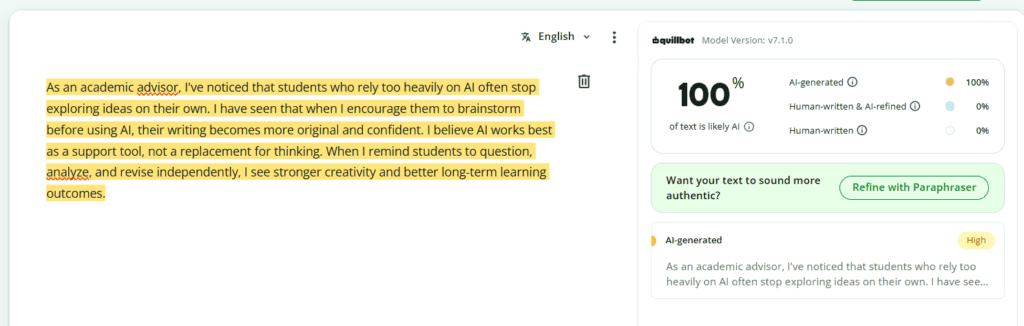
The second AI-generated test also came back as 100% AI. This gives more confidence that QuillBot is consistent when checking direct AI-written content. It did not randomly mark one AI sample as human and another as AI. That is a positive sign. Still, academic writing is rarely this simple because students often edit, restructure, paraphrase, cite sources, and add their own arguments.
Test 2: Paraphrased Content on QuillBot AI Detector
The next test was more interesting.
Many students think paraphrasing AI content will automatically make it look human. This is one of the most common assumptions I see. A student may generate a paragraph using ChatGPT, run it through a paraphrasing tool, and think the problem is solved.
But AI detection does not always work like that.
In my test, paraphrased content was still marked as 100% AI by QuillBot. That means simple rewording did not remove the AI signal.
This matters because students often search for how to avoid ai detection when what they really need is guidance on writing ethically, adding original analysis, using proper citations, and understanding the assignment instead of trying to hide AI usage.
There is a big difference between improving your writing and disguising AI-generated work.
Paraphrased Content Was Still Marked as 100% AI
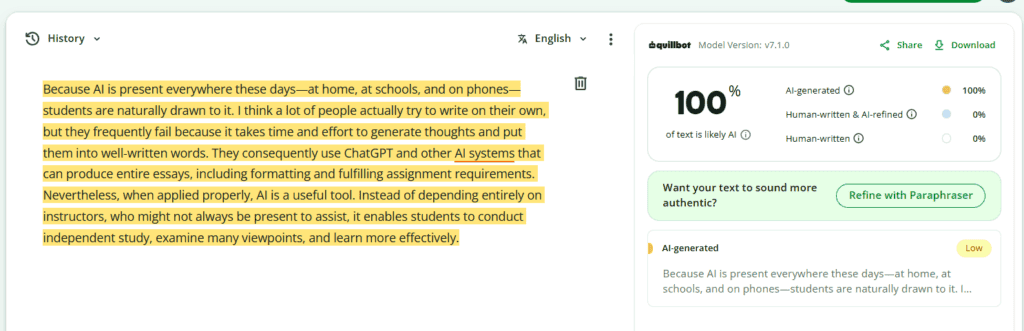
This was one of the most important results in the whole test. The content had been paraphrased, but QuillBot still marked it as 100% AI. This suggests that QuillBot may detect more than simple word choice. It may also respond to sentence structure, predictability, flow, and repeated AI-style patterns. For students, the lesson is clear: paraphrasing alone does not make writing safe, original, or academically strong.
Rewording Alone Did Not Remove the AI Detection Risk
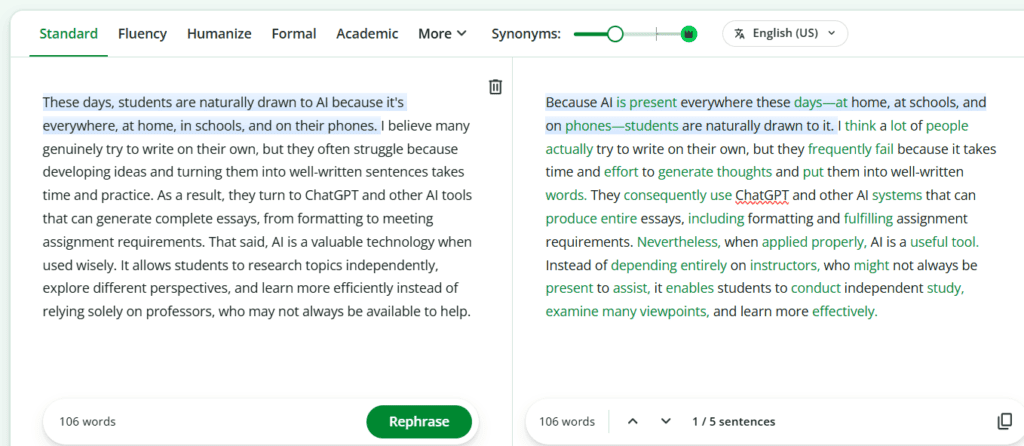
This screenshot supports the same point. The text was reworded, but the detector still identified it as AI. This is important because many students rely too much on surface-level rewriting. Changing words is not the same as building an original argument. A stronger approach is to understand the topic, write in your own reasoning, include specific examples, and make the structure match your assignment requirements.
Test 3: Human-Written Content on QuillBot AI Detector
Now we get to the test students care about most.
Can QuillBot correctly recognize human writing?
In my test, QuillBot marked the human-written content as human. That is a positive result. If a tool flags obvious AI content as AI and human content as human, that gives it some credibility.
But I still want to be careful here.
One human-written sample being marked correctly does not mean false positives never happen. AI detectors can sometimes flag human writing as AI, especially if the writing is very formal, generic, repetitive, or polished in a way that resembles machine-generated text.
This is why students should understand ai false positives before panicking over any AI detection score.
QuillBot Marked Human-Written Content as Human
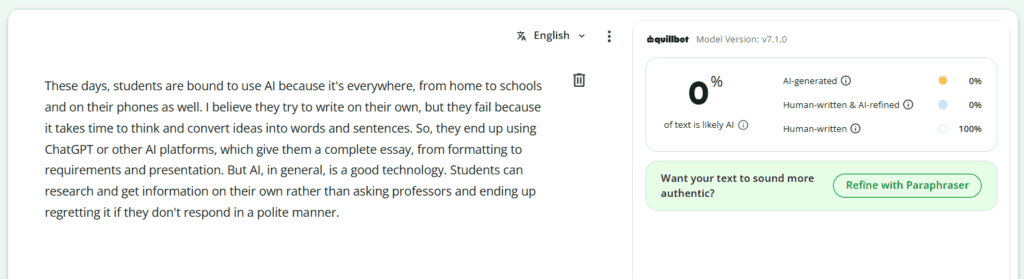
This was a good result for QuillBot. The human-written sample was not wrongly flagged as AI, which suggests the tool can separate obvious human writing from obvious AI writing in some cases. For students, this is reassuring. But it does not remove the possibility of false positives in other situations. Academic writing can be formulaic, structured, and polished, which sometimes makes even genuine student writing look suspicious to AI detectors.
Test 4: Rewritten Content and Mixed Results
The grey area begins when writing is not purely human or purely AI.
For example, what happens if a student writes something themselves but then asks ChatGPT to rewrite it? What if the ideas are human, but the final wording is AI-assisted? What if the student edits the AI output heavily? What if they use AI for grammar but not for content?
This is where AI detection becomes complicated.
A detector does not know your writing process. It only sees the final text. So, if the final text has AI-like patterns, it may flag it even if the original ideas came from you.
That is why students should avoid using AI tools blindly for full rewrites. A full rewrite can remove your natural voice and replace it with polished, generic wording. The result may sound smooth, but also suspiciously predictable.
Rewriting Human Content with ChatGPT Creates a Grey Area
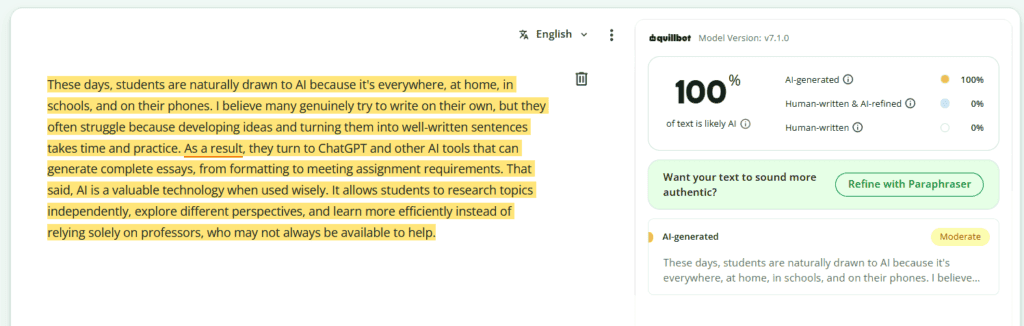
This screenshot shows a tricky situation. The original content may come from a human, but the wording is rewritten by ChatGPT. That creates a mixed authorship problem. AI detectors may not care that the original idea was yours if the final language looks AI-generated. This is why students should be cautious with full AI rewriting. It is better to use feedback, outlines, and editing support while keeping your own academic voice.
What My Testing Says About QuillBot AI Detector Accuracy
Based on my testing, QuillBot AI Detector performed well on clear examples. It detected direct ChatGPT content. It also detected paraphrased AI content. It recognized one human-written sample as human.
So, how accurate is QuillBot AI Detector?
My answer is: useful, but not final.
Here is the practical summary:
| Content Tested | QuillBot Result | What It Means |
| Direct ChatGPT content | 100% AI | Strong detection for obvious AI writing |
| Second ChatGPT content | 100% AI | Consistent result in simple AI testing |
| Paraphrased AI content | 100% AI | Rewording did not remove AI signal |
| Human-written content | Human result | Good sign for basic human detection |
| Rewritten human content | Grey area | Needs interpretation and human review |
The strongest part of QuillBot AI Detector is that it seems good at catching obvious AI-generated text. The risky part is that students may overtrust the score without understanding what it means.
An AI detector does not read your mind. It cannot know whether you wrote the first draft, used AI for grammar, copied from ChatGPT, or rewrote the paragraph five times yourself at 2 a.m. with coffee and regret.
It only checks patterns.
That is useful, but limited.
Can QuillBot AI Detector Be Wrong?
Yes, QuillBot AI Detector can be wrong.
This is not only a QuillBot issue. It applies to AI detectors in general. These tools work by estimating whether text matches common AI-generated patterns. They look at things like predictability, structure, phrasing, sentence rhythm, and other linguistic signals.
But human writing can sometimes look predictable too.
For example, a student writing a basic introduction may use common academic phrases. A non-native English speaker may write in a structured and careful way. A student following a strict rubric may produce sentences that sound formulaic. In all these cases, a detector might become uncertain.
This is why AI detection should be used as a guide, not a final judgment.
A high AI score should make you review the writing, but it should not automatically mean the work is fake. A low AI score may reduce worry, but it does not automatically mean the work is strong, well-cited, or academically acceptable.
Students should combine AI detection with:
| Check | Why It Matters |
| Plagiarism check | Finds copied or closely matched sources |
| Citation review | Ensures sources are used properly |
| Human editing | Improves clarity and argument |
| Assignment rubric review | Checks whether the work answers the task |
| Draft history | Shows your writing process |
| Tutor feedback | Helps improve weak sections |
This is also why a free plagiarism check can be useful alongside AI detection. AI detection and plagiarism checking are related, but they are not the same thing.
QuillBot Trustpilot Reviews: What Users Are Saying About Their AI Detector
Testing is useful, but public feedback matters too.
I looked at Trustpilot review screenshots to see what users are saying about QuillBot. The overall picture is mixed. Some users praise QuillBot and call it accurate, useful, and easy to use. Others complain about wrong AI detection, subscription issues, refund problems, and poor value for money.
That does not mean QuillBot is bad.
It means QuillBot is like many popular tools: helpful for some users, frustrating for others.
QuillBot Has a Strong Trustpilot Rating Overall
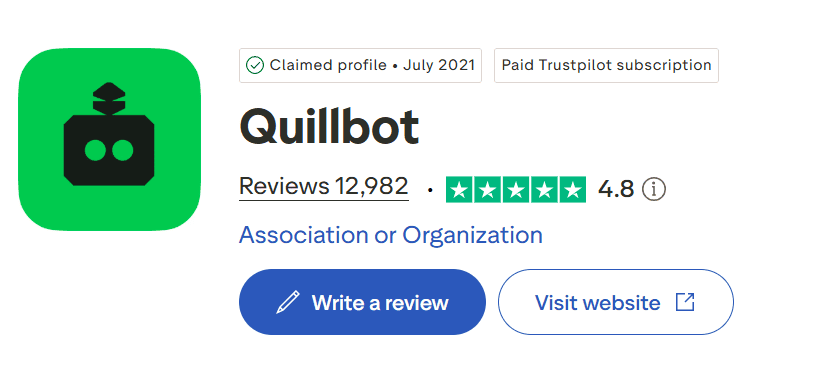
The Trustpilot summary shows that QuillBot has a strong overall presence and many users have reviewed it. However, this overall rating reflects the whole QuillBot platform, not only the AI detector. QuillBot includes paraphrasing, grammar checking, summarizing, citation tools, and other writing features. So, when judging the AI detector specifically, we need to look beyond the overall rating and check what users actually say about accuracy.
Positive Trustpilot Reviews About QuillBot AI Detector
Some Trustpilot reviews are clearly positive. These users describe QuillBot as accurate, useful, easy to work with, and helpful for AI detection or writing support.
This matters because a fair review should not only focus on complaints. If many users find the tool helpful, that should be included too.
A User Calls QuillBot “Super Accurate”
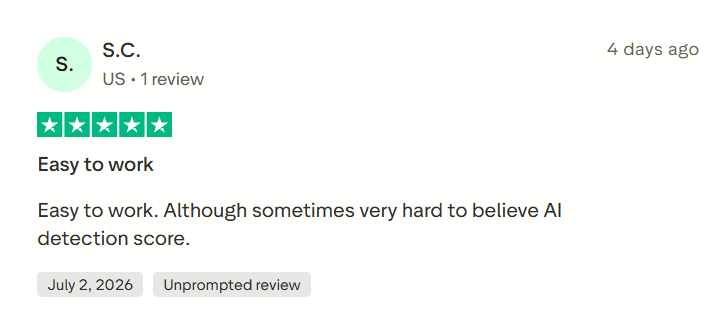
This review supports the positive side of QuillBot’s reputation. The reviewer describes the tool as accurate and useful, which is exactly what students want from an AI checker. However, one positive review cannot prove that the detector works perfectly in every academic situation. It simply shows that some users have had a good experience with QuillBot’s results.
A Review Praising QuillBot’s AI Detection and Paraphrasing
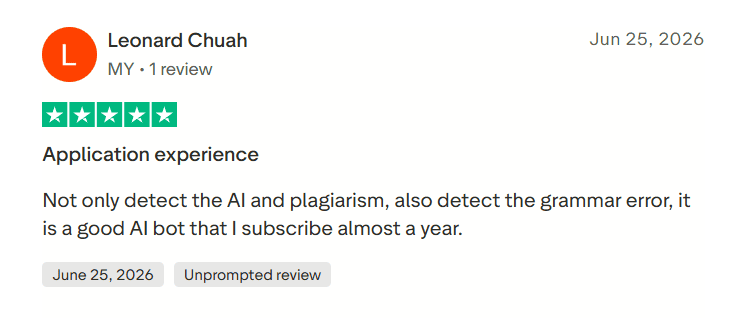
This review is useful because it mentions QuillBot’s broader writing features, including AI detection and paraphrasing. Many students use QuillBot because it brings several writing tools into one platform. That convenience is a real advantage. Still, students should remember that paraphrasing and AI detection are not magic fixes. Academic writing needs understanding, structure, citations, and original thinking.
A Reviewer Says QuillBot Gives the Right Results
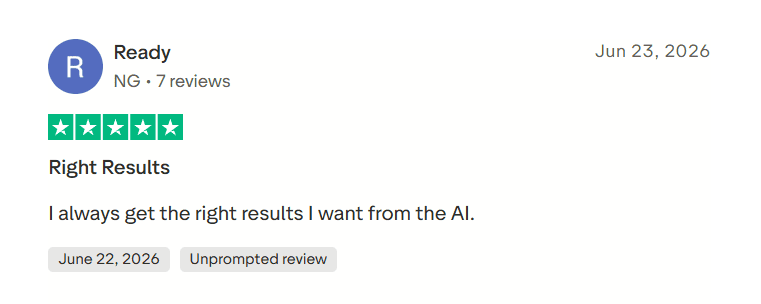
This review suggests that some users trust QuillBot’s results and feel the detector gives them the answer they expect. That lines up with my direct AI tests, where the tool correctly flagged ChatGPT-generated content. But accuracy can depend heavily on the type of text being tested. Clear AI content is easier to detect than mixed, edited, or heavily revised academic writing.
QuillBot Review Praising the AI Detector and Plagiarism Checker
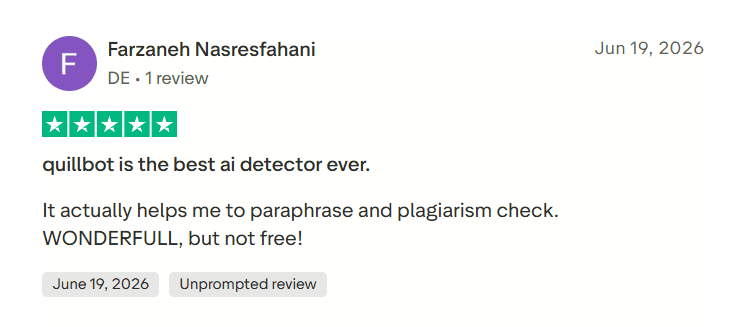
This review connects AI detection with plagiarism checking, which is interesting because students often use both before submission. However, AI detection and plagiarism detection are different. A plagiarism checker looks for copied or matched text, while an AI detector estimates whether writing seems machine-generated. A strong academic review should consider both, especially if the work is for university submission.
A User Finds QuillBot Easy to Work With
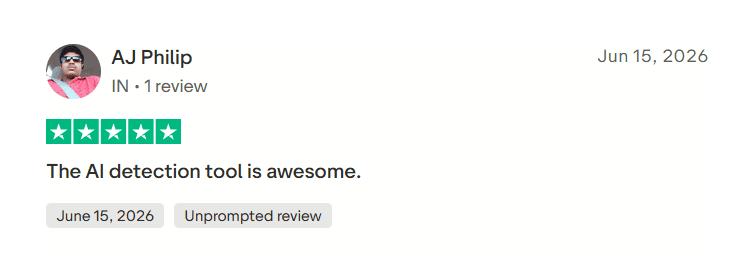
Ease of use is one reason QuillBot is popular. Students do not want a tool that needs a full training course just to check one essay. A simple interface makes the detector accessible and fast. But simple does not always mean complete. Students still need to understand what the score means and whether the writing needs revision, citation improvement, or human feedback.
A User Calls the QuillBot AI Detection Tool Awesome
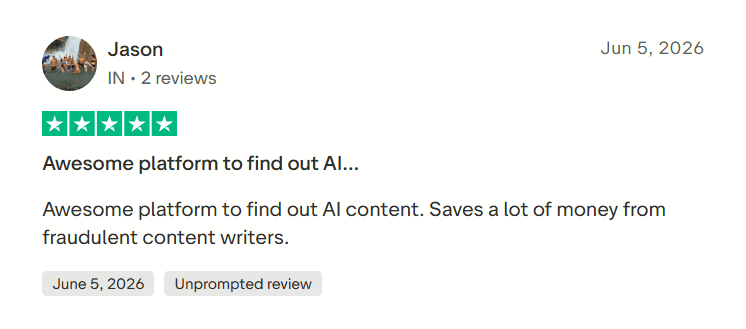
This review shows that some users are genuinely satisfied with QuillBot’s AI detection tool. Positive experiences like this matter because they show the tool can be helpful in real use. At the same time, a good review does not remove the need for caution. AI detection is not an exact science, and even useful tools can produce results that need interpretation.
QuillBot Praised as a Good Platform for AI Detection
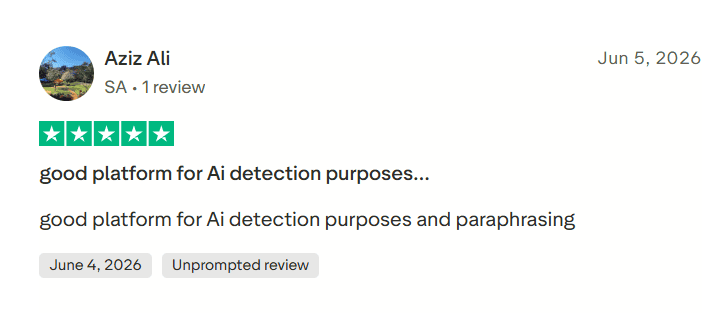
This review supports the idea that QuillBot can work well as a general AI detection platform. For quick checks, that can be useful. A student can paste their draft and get an initial idea of whether the writing appears AI-generated. But for serious academic submissions, a quick score should only be the first step, not the final decision.
A Reviewer Trusts QuillBot’s AI Detector
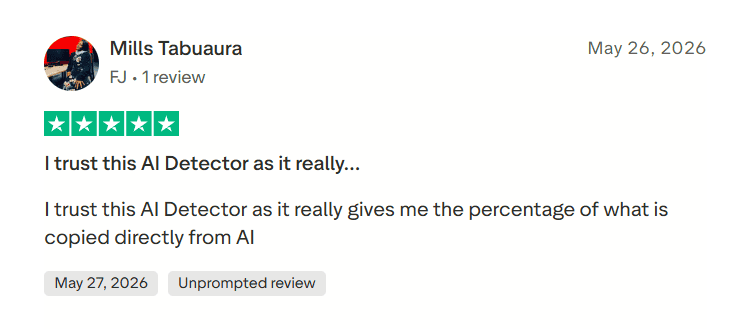
This review shows user confidence in QuillBot’s AI detector. Trust is important because students need tools that reduce stress, not add more confusion. However, trust should come from repeated testing and careful use, not just from the brand name. Even a trusted detector should be used alongside human judgment and academic review.
QuillBot Review Says It Detects AI Content Well
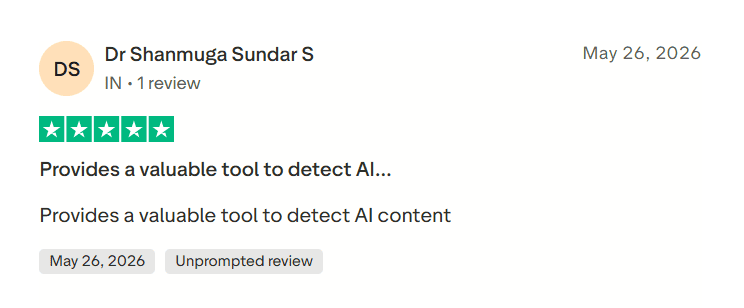
This review directly supports QuillBot’s value for AI content detection. It matches the results I saw when testing direct ChatGPT-generated content. The detector performed strongly in clear AI cases. But the more complex the writing becomes, especially when it includes paraphrasing, editing, or mixed authorship, the more carefully students should interpret the result.
Negative Trustpilot Reviews About QuillBot AI Detector
Now let’s look at the other side.
Negative Trustpilot reviews raise concerns about accuracy, subscription problems, customer support, and value for money. Some users complain that QuillBot gave strange AI detection results. Others focus more on billing or cancellation issues.
These reviews do not prove that QuillBot AI Detector is useless. But they do show that not every user has a smooth experience.
A Reviewer Says QuillBot Is Not Accurate
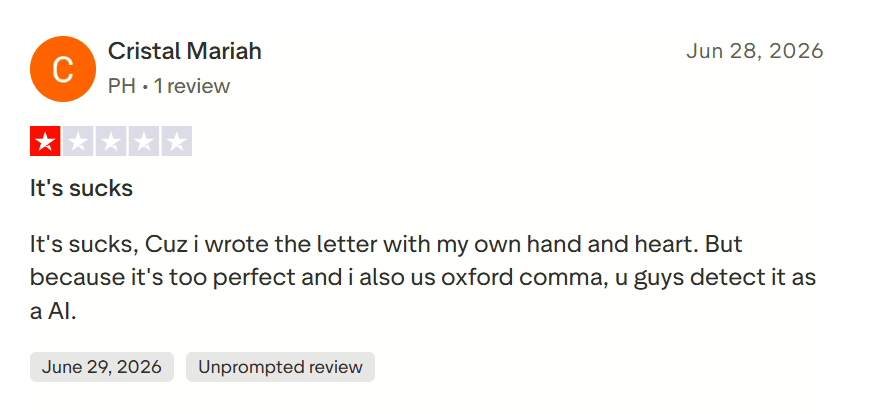
This review directly challenges QuillBot’s accuracy. The user appears frustrated because the tool did not behave as expected. This matters because students use AI detectors for reassurance. If the tool gives confusing results, it can create more anxiety instead of solving the problem. This is one reason I would never recommend treating one AI detection score as final proof.
A User Complains About QuillBot Subscription Problems
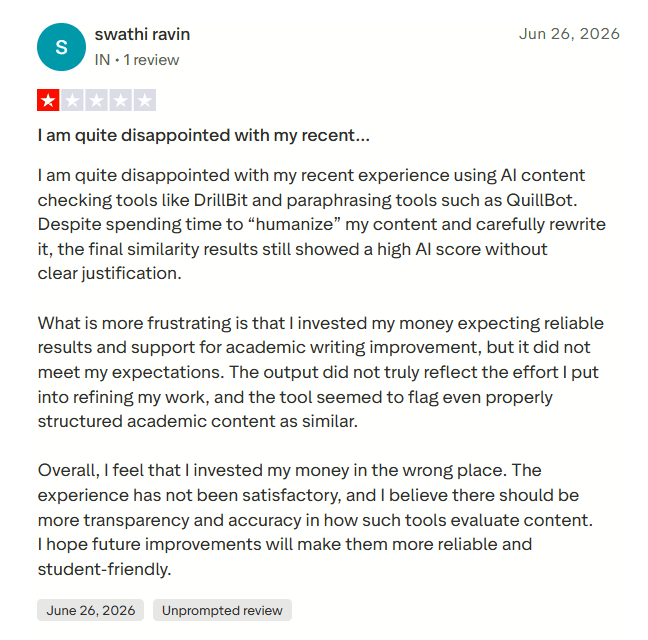
This review is not only about AI detection accuracy. It focuses on subscription and cancellation problems, which are still important for students. Many students work with limited budgets, so paying for a tool should feel worthwhile and transparent. If users feel trapped, overcharged, or unsupported, that affects whether the platform feels trustworthy overall.
A User Says the AI Detector Connection Feels Unreliable
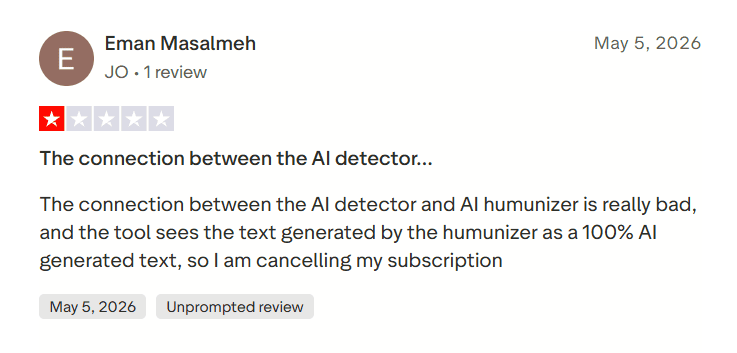
This review raises a concern about the relationship between AI detection and tools that claim to make writing look more human. That is a messy area. Students should be careful when one tool tells them something is AI and another promises to hide it. This can create a cycle of rewriting, checking, rewriting again, and becoming more confused. Academic writing should focus on clarity and originality, not just beating a detector.
A Reviewer Says QuillBot Is Expensive for What It Offers
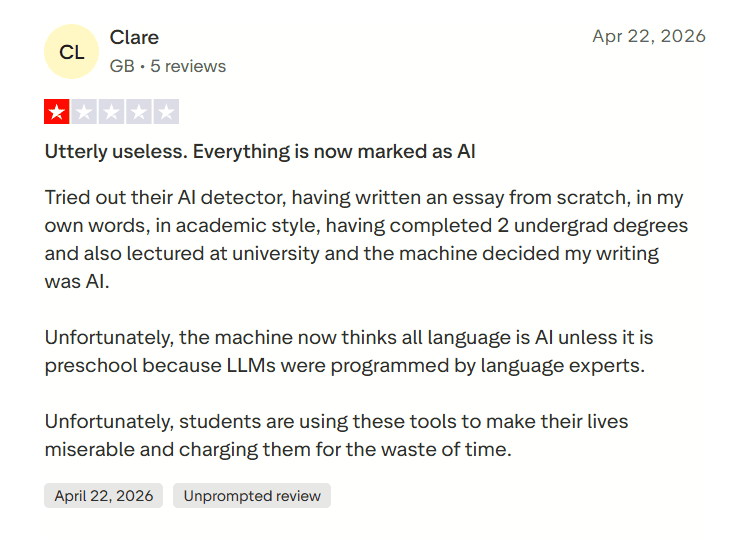
This review focuses on value for money. A tool may be useful, but students still need to ask whether it is worth paying for. If someone pays for a detector and still needs another tool or human review to understand the result, the value becomes less clear. That is why free academic support options and guided interpretation can be more useful than just another percentage score.
A Long Complaint About QuillBot’s Paid Experience
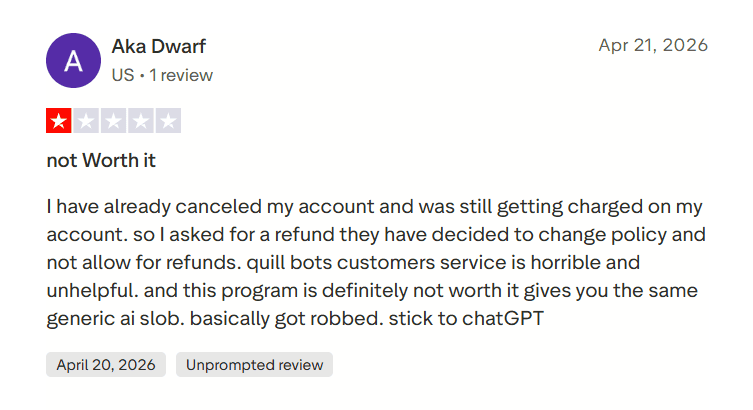
This longer review suggests frustration with the paid version and overall experience. For students, this is important because the real issue is not only whether QuillBot gives a number. The real issue is whether the tool helps them understand what to do next. If a detector says “AI” but gives little useful direction, students may still feel stuck.
A User Says QuillBot Missed AI and Paraphrased Content
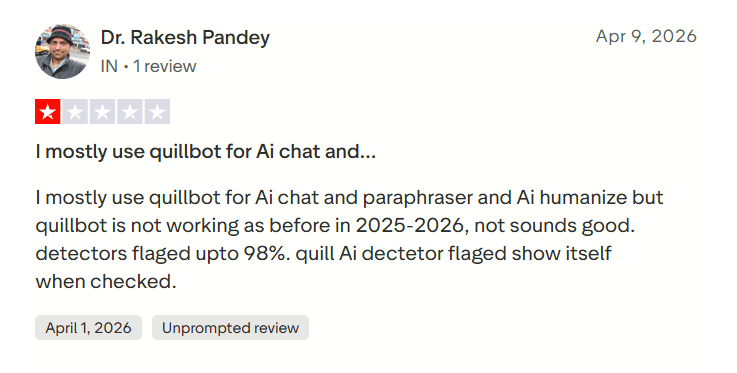
This complaint is important because it challenges the reliability of the detector. If a tool misses AI content or gives inconsistent results, users may get false confidence. In my own test, QuillBot detected paraphrased AI content strongly, but this review suggests not every user has the same experience. That is why AI detection should always be treated as a helpful signal, not a guarantee.
A Teacher Says Student Work Was Marked as AI
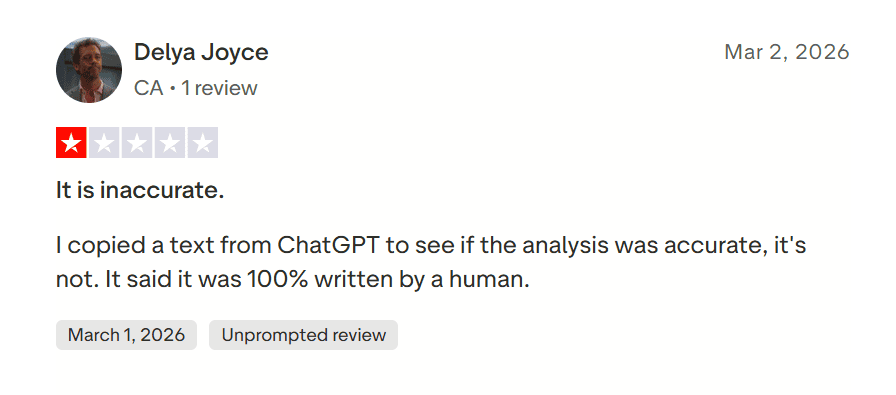
This review is especially relevant for academic users because it describes a student assignment being marked as AI. These situations can become stressful very quickly. If a student’s original work is flagged, the score alone should not be used as final judgment. Teachers and students should look at drafts, notes, sources, writing history, and the assignment context before making conclusions.
A User Says They Switched Back to ChatGPT
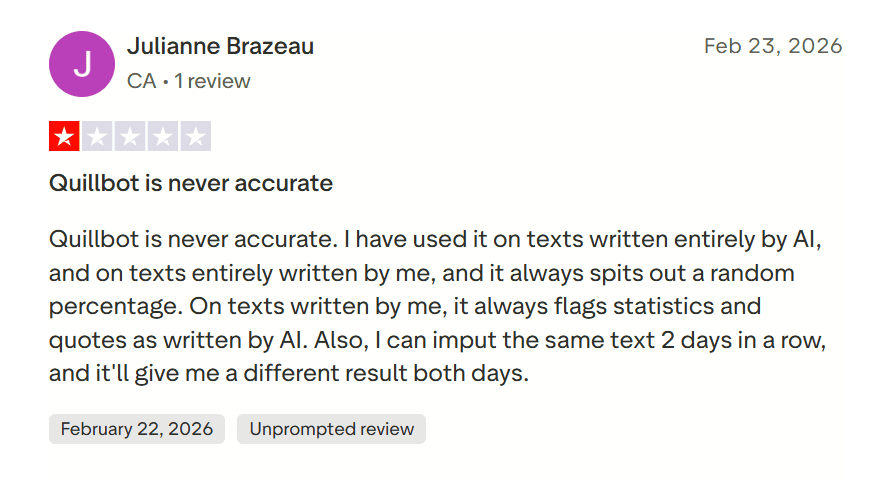
This review shows dissatisfaction with QuillBot’s value and performance. Not every user feels the paid tool gives enough benefit. For students, this is a reminder to test tools carefully before depending on them. A tool that works well for one person may not fit another person’s writing style, budget, or academic needs.
A Reviewer Says QuillBot Was Not Useful for AI Chat and Paraphrasing
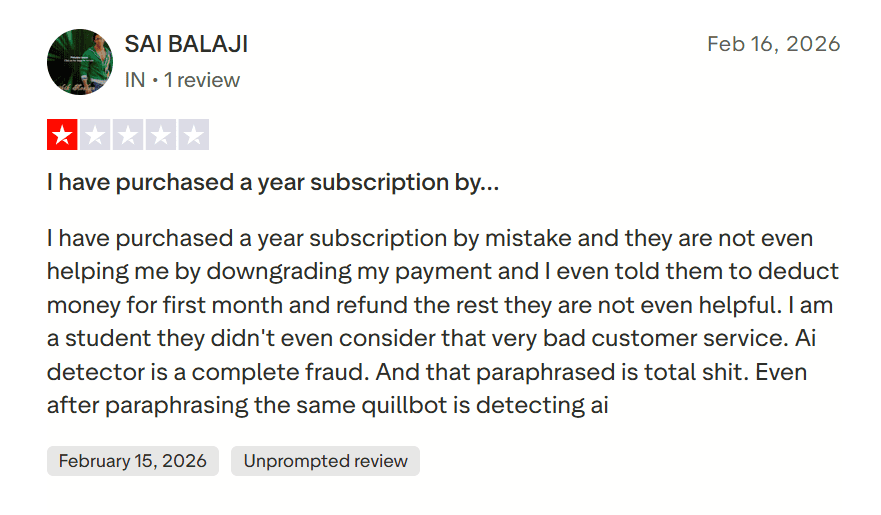
This review is another example of frustration with QuillBot’s broader AI features. While it does not automatically prove the AI detector is inaccurate, it does show that some users are not satisfied with the platform experience. Students should pay attention to these complaints because writing tools should reduce workload, not create extra confusion.
A User Says QuillBot Wasted Time and Money
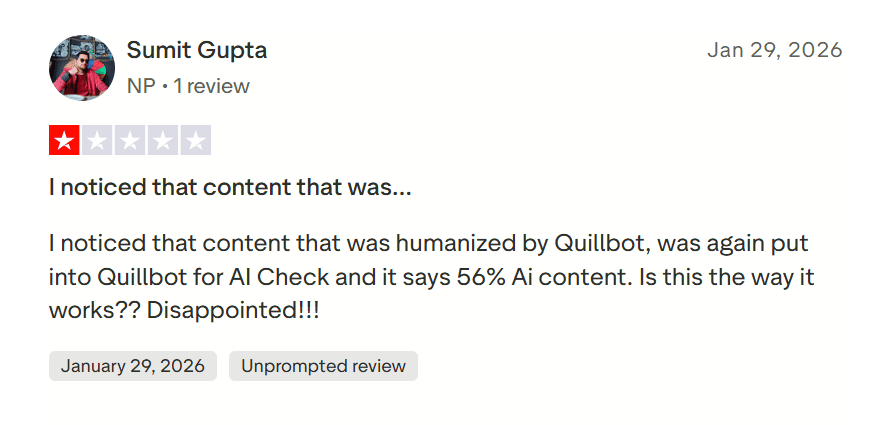
This review focuses on disappointment after paying. That matters because students often subscribe to tools during deadline pressure. My advice is simple: test free options first, compare results, and do not assume a paid tool is automatically more accurate. For academic work, understanding the result is often more valuable than the result itself.
Reddit Discussions About QuillBot AI Detector
Reddit discussions are different from Trustpilot reviews.
Trustpilot reviews often focus on user experience, subscriptions, and satisfaction. Reddit discussions usually show raw student anxiety. People ask whether the detector can be trusted, whether their writing will be flagged, and whether rewriting or paraphrasing changes the result.
These discussions are not always perfectly scientific, but they are useful because they show what students are genuinely worried about.
Reddit Users Discuss Whether QuillBot AI Detection Can Be Trusted
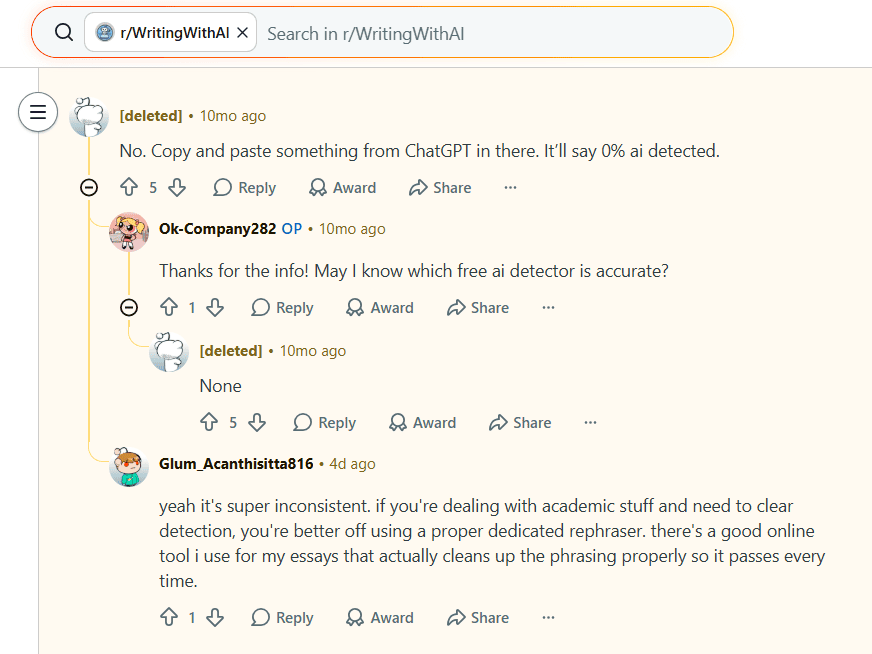
This Reddit discussion shows users debating whether QuillBot AI detection can be trusted. That is exactly the question many students ask before submitting work. The problem is that different AI detectors can give different scores, which makes students unsure which result to believe. This supports the main point of the review: QuillBot can be useful, but students should not depend on one score alone.
Reddit Users Question Whether AI Detection Results Are Fair
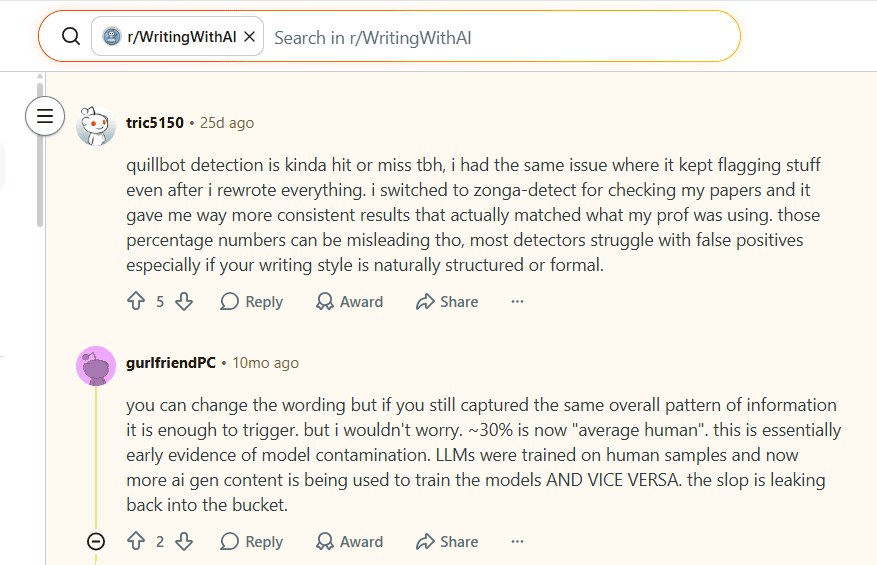
This screenshot highlights a common concern: fairness. Students want to know whether AI detection results are reasonable or random. When a detector gives a high score without explaining the exact issue clearly, it can feel unfair. This is why students need education around AI scores, not just access to detection tools.
Reddit Discussion About AI Detection and Rewriting
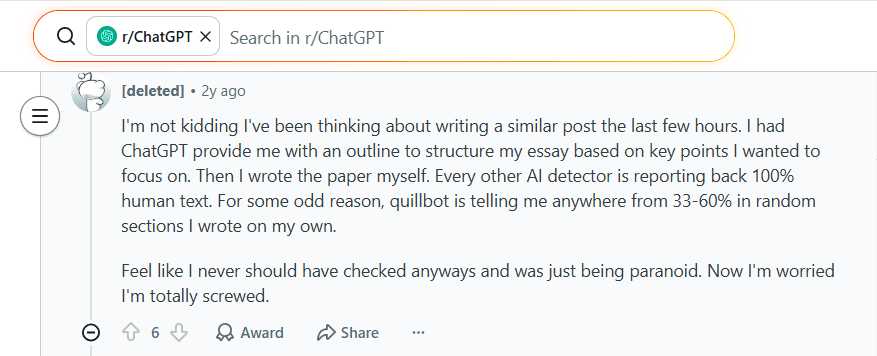
This Reddit discussion fits well with the rewritten content test. Many students assume rewriting will automatically reduce AI detection risk, but the reality is more complicated. A rewritten paragraph can still have AI-like structure, tone, and phrasing. The safer approach is not to keep rewriting until a detector is happy, but to improve the work through real understanding and original analysis.
Reddit Users Share Concerns About AI Detector Accuracy
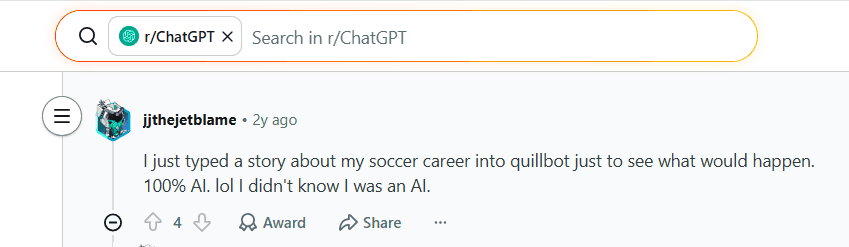
This screenshot shows the anxiety around AI detector accuracy. Students often feel stuck when one tool says their work is human and another says it is AI. That kind of inconsistency can make people panic, especially near deadlines. This is why I recommend using AI detectors as one part of the review process, not the whole process.
A Reddit User Says QuillBot Is Mostly Good but Not Perfect
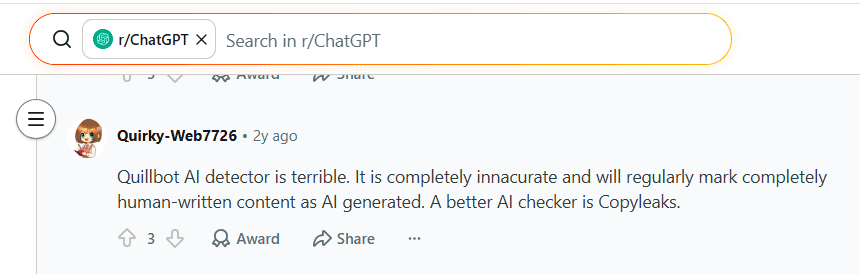
This screenshot gives a more balanced view. Some users may find QuillBot helpful while still admitting it is not perfect. That is probably the fairest way to describe the tool. It can work well in certain cases, especially obvious AI text, but it should not be treated as flawless. A balanced review is more useful than either blindly praising or completely dismissing it.
Pros and Cons of QuillBot AI Detector
Here is my honest pros and cons summary after testing the tool and reviewing user feedback.
| Pros | Cons |
| Easy to use | Can give confusing results |
| Good at detecting obvious AI content | Not final proof of AI writing |
| Detected direct ChatGPT content in my test | Public reviews are mixed |
| Detected paraphrased AI content in my test | Paid experience may disappoint some users |
| Recognized human writing in my test | May not explain results deeply enough |
| Useful for quick first checks | Students still need human review |
| Accessible for students and writers | Accuracy can vary by text type |
The biggest advantage is convenience. QuillBot AI Detector is simple and fast.
The biggest weakness is interpretation. A score alone does not tell the whole story.
If your essay gets flagged, you still need to ask:
- Which parts are causing the problem?
- Does the writing sound too generic?
- Are the examples too vague?
- Is the structure too predictable?
- Did I use AI to rewrite large sections?
- Do I have drafts or notes to prove my process?
- Have I cited sources properly?
That is where students often need support beyond a detector.
QuillBot AI Detector vs Other AI Checkers
QuillBot is not the only AI detector students use. Other tools like ZeroGPT, Turnitin, Copyleaks, GPTZero, and academic support platforms are also part of the discussion.
Each tool has a different purpose.
| Tool | Best For | Limitation |
| QuillBot AI Detector | Quick AI checks | May need interpretation |
| ZeroGPT | Fast AI detection comparison | Can also produce mixed results |
| Turnitin AI detection | Academic institutions | Usually not directly available to all students |
| Copyleaks | AI and plagiarism checks | Can be more technical |
| Skyline Academic | Academic AI detection support | Best for students who need guidance, not just a score |
QuillBot is useful when you want a quick first check. But for academic submission, students often need more than a percentage. They need help understanding whether the writing is original, whether the argument is strong, whether citations are correct, and whether the work meets the rubric.
That is why comparing QuillBot with tools like Zerogpt and Stealthwriter AI can be useful. Different tools may produce different scores, and that difference itself teaches an important lesson: AI detection is not absolute.
Students also ask whether can turnitn detect ai and whether a Turnitin similarity score is the same as an AI score. It is not. Similarity checks and AI detection checks measure different things.
A similarity score checks matched text.
An AI score predicts AI-like writing patterns.
Both need context.
Is QuillBot Better Than Turnitin AI Detection?
This is a common student question, but it depends on what you mean by “better.”
QuillBot is easier for students to access directly. You can paste content and get a quick result. That makes it useful for personal checking before submission.
Turnitin, on the other hand, is usually used by universities and institutions. Students may not always have direct access to the AI detection report. Turnitin is also tied to academic submission workflows, which makes it more serious in university contexts.
So, I would not compare them as simple competitors.
| Feature | QuillBot AI Detector | Turnitin AI Detection |
| Student access | Easier | Usually institution-based |
| Speed | Fast | Depends on submission system |
| Academic use | Informal checking | Formal academic review |
| Score interpretation | Student must interpret | Often interpreted by staff |
| Best use | Pre-submission check | Institutional review |
If you are a student, QuillBot can help you check your work before submission. But if your university uses Turnitin, you should still follow your institution’s academic integrity rules. Do not assume that passing one detector means every other detector will give the same result.
That is the painful truth of AI detection.
One tool may say low AI. Another may say high AI. And you, the student, are left staring at the screen like it personally betrayed you.
Best Alternative to QuillBot AI Detector for Students
If you only want a quick AI score, QuillBot can be useful.
But if you are a student and you want academic-focused guidance, you may need more than a detector. You may need someone to help you understand why a section looks AI-written, how to make your argument stronger, how to improve citations, and how to keep your own voice in the work.
That is where Skyline Academic can be a strong alternative for students.
Skyline Academic supports students with academic writing guidance, AI detection support, plagiarism checking, coursework support, and live tutoring. The difference is that students are not just getting a percentage. They can get help understanding what the score means and how to improve the work properly.
Skyline Academic also offers a free ai detector for essays, which is useful for students who want to check their work without immediately paying for another tool.
Along with AI detection, students can also use academic support like 1:1 Personalized Live Tutoring to improve their understanding of the subject, assignment structure, and writing quality. This is especially helpful when the issue is not just AI detection, but weak analysis, unclear arguments, missing evidence, or poor academic style.
Skyline Academic provides:
| Support Area | How It Helps Students |
| AI detection support | Helps identify risky AI-like sections |
| Plagiarism detection | Checks copied or matched content |
| 1:1 live tutoring | Gives personal academic guidance |
| Dedicated LMS | Helps track materials and progress |
| Coursework guidance | Supports assignment planning |
| Video lectures | Helps students understand difficult topics |
| Bootcamps | Supports focused academic improvement |
| Workshops | Builds academic and writing skills |
This kind of support is especially useful because students do not only need to know whether something is AI-detected. They need to know how to fix it ethically.
Why Skyline Academic Is Useful After an AI Detection Score
Let’s say QuillBot marks your essay as 70% AI.
What now?
That is the part many tools do not handle well. They give you a number, but they do not always explain how to improve the work academically.
A student may start randomly changing words, replacing phrases, or using another paraphrasing tool. That can make the writing worse. It can also remove clarity, damage meaning, or create awkward sentences.
Skyline Academic is useful because it focuses on academic support, not just detection. Students can get help with structure, clarity, originality, citations, and argument development.
For example, if a paragraph sounds AI-written, the solution may not be to use fancier words. The solution may be to add:
- A specific example
- A source-based explanation
- Your own interpretation
- A link back to the assignment question
- A clearer topic sentence
- Better evidence
- A less generic conclusion
That is real improvement.
Students who want ongoing learning support can also explore Skyline Academic’s practical guides about ai to better understand AI writing, detection scores, and academic risks.
What Students Should Do If QuillBot Marks Their Work as AI
If QuillBot marks your work as AI, do not panic.
Seriously, step away from the laptop for two minutes if needed.
A high AI score can be stressful, but it does not automatically mean you have done something wrong. It means the writing has patterns that the detector associates with AI-generated text.
Here is what I would do:
| Step | What to Do | Why It Helps |
| 1 | Read the flagged sections carefully | Understand what looks suspicious |
| 2 | Check for generic wording | AI text often sounds broad and vague |
| 3 | Add your own reasoning | Human writing usually has clearer judgment |
| 4 | Include specific examples | Specificity makes writing more authentic |
| 5 | Improve citations | Sources strengthen academic credibility |
| 6 | Keep drafts and notes | Helps prove your writing process |
| 7 | Get feedback | A human reviewer can interpret better than a score |
You should also compare the writing with the understanding the difference between human and ai writing guide, because many AI-like sections have common patterns. They may sound smooth but shallow, confident but unsupported, or structured but too generic.
The goal is not to “trick” a detector.
The goal is to make the writing genuinely yours.
What Makes Writing Look AI-Generated?
AI detectors often react to patterns that appear commonly in machine-generated writing. These patterns are not always proof of AI use, but they can increase suspicion.
Common AI-like writing features include:
| AI-Like Feature | Example Problem |
| Generic introductions | Says a lot without saying anything specific |
| Predictable structure | Every paragraph follows the same rhythm |
| Overly polished tone | Sounds smooth but lacks personality |
| Weak examples | Gives broad claims without detail |
| Repetitive phrasing | Uses the same sentence style again and again |
| No personal reasoning | Summarizes but does not analyze |
| Too balanced everywhere | Avoids making a clear argument |
Human academic writing is not just about sounding natural. It should also show thinking.
That means your essay should include your interpretation, your response to sources, your explanation of why evidence matters, and your connection to the assignment question.
AI-generated writing often sounds like it understands the topic, but when you look closely, it may stay on the surface.
Should Students Use QuillBot AI Detector Before Submission?
Yes, students can use QuillBot AI Detector before submission, but they should use it carefully.
I would use it as a first check, not a final decision.
It can help you identify whether your writing looks risky. If it gives a high AI score, that is a sign to review the writing more carefully. If it gives a low AI score, that is reassuring, but you should still check originality, citations, and assignment quality.
Before submitting academic work, I would check:
| Check Before Submission | Why It Matters |
| AI detection | Helps identify AI-like writing |
| Plagiarism | Finds copied or matched content |
| Similarity score | Shows overlap with sources |
| References | Prevents citation problems |
| Rubric alignment | Ensures the assignment is answered |
| Formatting | Avoids presentation issues |
| Final proofreading | Fixes grammar and clarity |
This is why students should not rely on only one tool. QuillBot may help, but a complete academic review is safer.
My Honest Verdict on QuillBot AI Checker
After testing it, I think QuillBot AI Checker is useful.
It performed well in my direct tests. It detected ChatGPT-generated content. It detected paraphrased AI content. It recognized human-written content as human.
That is good.
But I would still be careful.
The Trustpilot and Reddit screenshots show that users have mixed experiences. Some people trust QuillBot and praise its accuracy. Others complain about wrong results, missed detection, confusing AI scores, subscriptions, or poor value.
So, my honest verdict is:
QuillBot AI Detector is a helpful quick-check tool, but it should not be treated as final academic proof.
For students, this is the safest way to use it:
| Use QuillBot For | Do Not Use QuillBot For |
| Quick pre-submission AI check | Final proof that work is human |
| Identifying risky sections | Replacing academic judgment |
| Comparing AI and human drafts | Proving innocence or guilt |
| Improving awareness | Blindly rewriting your essay |
| First review stage | Submitting without deeper checking |
If your score is high, revise thoughtfully. If your score is low, still check the quality. If your result is confusing, get human academic support.
Is QuillBot AI Content Detector Good for Essays?
QuillBot AI Content Detector can be helpful for essays, but essays are more complex than basic AI samples.
An essay usually includes an introduction, thesis statement, body paragraphs, evidence, citations, analysis, and conclusion. Some parts may naturally sound more formal or structured. That does not automatically make them AI-generated.
For example, an essay introduction might sound generic if the student uses common opening lines. A literature review might sound polished because academic writing has a formal style. A conclusion might sound repetitive because it summarizes earlier points.
AI detectors can sometimes struggle with these situations.
So, if you use QuillBot AI Detector for essays, do not only ask, “What percentage did I get?”
Ask better questions:
- Does my essay answer the actual question?
- Are my examples specific?
- Do I explain the evidence?
- Is my voice present?
- Are my citations correct?
- Is the argument original?
- Can I explain my writing process if asked?
That is much more useful than staring at one number.
QuillBot AI Detector Review Summary
Here is the full review in one table:
| Review Area | My Rating | Explanation |
| Ease of use | Good | Simple and fast interface |
| Direct AI detection | Strong | Detected ChatGPT content as AI |
| Paraphrased AI detection | Strong in my test | Still marked paraphrased AI as AI |
| Human content detection | Good in my test | Human-written content was not flagged |
| Score explanation | Limited | Students may still need guidance |
| Academic reliability | Moderate | Useful, but not final proof |
| User reviews | Mixed | Positive and negative feedback both exist |
| Best use case | First check | Good before deeper review |
Overall, I would give QuillBot AI Detector credit for catching obvious AI content. But I would not give it the power to decide whether a student’s work is academically honest.
That decision needs context, evidence, drafts, sources, and human judgment.
Final Verdict Before FAQs: Is QuillBot AI Detector Accurate?
So, is QuillBot AI Detector accurate?
Based on my testing, QuillBot AI Detector is reasonably accurate for obvious AI-generated content. It correctly detected direct ChatGPT text and paraphrased AI text in my tests. It also correctly treated one human-written sample as human.
But based on Trustpilot and Reddit feedback, user experiences are mixed. Some users praise the tool and trust its results. Others complain about inaccurate detection, confusing results, or poor paid experiences.
So, I would not use QuillBot AI Detector as the only source of truth for academic work.
Use it as a first check. Use it to identify possible risk. Use it to review your writing more carefully. But do not panic over one score, and do not assume one tool can fully understand your writing process.
FAQs QuillBot AI Detector
Is QuillBot AI Detector accurate?
QuillBot AI Detector can be accurate in simple cases, especially with obvious AI-generated content. In my testing, it detected direct ChatGPT content as 100% AI. However, it should not be treated as final proof because AI detectors can still make mistakes.
How accurate is QuillBot AI Detector for students?
For students, QuillBot AI Detector is useful as a quick first check. It can highlight whether writing looks AI-generated, but students should still review citations, originality, structure, and assignment quality before submission.
Can QuillBot AI Detector be wrong?
Yes, QuillBot AI Detector can be wrong. Like other AI checkers, it predicts patterns rather than proving authorship. Human writing can sometimes look AI-like, and edited AI content can sometimes confuse detectors.
Does QuillBot AI Detector detect ChatGPT?
In my testing, yes. QuillBot AI Detector marked direct ChatGPT-generated content as 100% AI. This suggests it can detect obvious ChatGPT-style writing, especially when the content is not edited heavily.
Can QuillBot detect paraphrased AI content?
In my test, QuillBot detected paraphrased AI content and still marked it as 100% AI. This shows that simple paraphrasing may not remove AI detection risk, especially if the structure and tone still feel machine-generated.
Is QuillBot AI Checker good for essays?
QuillBot AI Checker can be useful for checking essays before submission, but it should not be the only review step. Essays need proper arguments, citations, analysis, and originality, not just a low AI score.
Is QuillBot AI Content Detector better than Turnitin?
QuillBot is easier for students to access directly, while Turnitin is usually used by institutions. QuillBot is good for quick personal checks, but Turnitin is more commonly connected to formal academic submission systems.
What should I do if QuillBot says my essay is AI-written?
Do not panic. Review the flagged sections, add more original reasoning, include specific examples, improve citations, and keep your drafts or notes. A high AI score is a warning sign, not automatic proof of misconduct.
Can human writing be flagged as AI by QuillBot?
Yes, it is possible for human writing to be flagged by AI detectors, especially if it sounds generic, overly polished, or formulaic. That is why AI scores should always be interpreted with context.
What is the best alternative to QuillBot AI Detector for students?
The best alternative depends on what you need. If you only want a quick score, several AI detectors can help. If you need academic-focused guidance, Skyline Academic is a strong option because it supports AI detection, plagiarism checking, tutoring, coursework guidance, and student progress support.
Conclusion
QuillBot AI Detector is useful, but it is not perfect.
In my testing, it performed strongly with direct ChatGPT-generated content and paraphrased AI content. It also correctly recognized human-written content in one test. That means it can be helpful for students who want a quick AI check before submitting their work.
But the bigger picture is more complicated.
Trustpilot and Reddit feedback show mixed user experiences. Some users praise QuillBot and trust its AI detection results. Others complain about accuracy, subscriptions, and confusing outcomes. That is why students should avoid treating one AI score as final proof.
My final advice is simple: use QuillBot AI Detector as a first check, not the final answer.
If your score is high, review the writing carefully. If your score is low, still check your citations, originality, and assignment quality. If the result feels confusing, get proper academic feedback instead of randomly rewriting everything.
AI detection can be helpful, but strong academic writing still comes from understanding, original thinking, clear structure, and honest revision.