
Anthropic announced on 14 August 2026 that new Claude models will embed an invisible watermark in every piece of text they generate, a change made to comply with the EU AI Act’s transparency rules. If you use Claude to research, outline, or polish your writing, or you support students who do, this guide breaks down what the watermark actually is, what it can and cannot prove, whether your university can currently check for it, and what to do about it.
Short answer first. A Claude watermark is a signal that Claude was involved in producing or processing a piece of text. It is not proof that you cheated, and it is not proof that you didn’t. Treat it the same way you would treat any single piece of evidence, useful in context, meaningless as a verdict on its own.
This matters beyond the technical curiosity of it. Students are already anxious about AI detection getting things wrong, and a headline about invisible watermarks tends to make that anxiety worse before anyone explains what it actually covers. Understanding the real mechanics here, what triggers a mark, what doesn’t, and who can even check for one right now, is the difference between reasonable caution and panic over a feature that mostly doesn’t work the way early reactions assumed.
What Claude’s Text Watermark Actually Is (And What It Isn’t)
Since the announcement, a lot of confusion has spread about what this watermark looks like. It is not a hidden character, an invisible label, or a tag added to the end of your document. Anthropic’s own explainer is clear that nothing is added to the text at all. The watermark lives in the statistical pattern of word choices Claude makes while writing, which is a very different thing from a piece of metadata you could simply delete.
That distinction matters because plenty of commercial tools now market themselves as a “Claude watermark remover.” Most of them work by stripping zero width characters, unusual Unicode symbols, or em dashes, none of which is how this watermark actually works. Reporting on the rollout noted that users cannot opt out of the new markings, and a widely read breakdown of the announcement warned that several of the apps claiming to detect or remove the mark had no way to verify their own claims, with some bundled with malware. If a site promises a one click Claude watermark check or removal, treat that claim with real skepticism.
Generated files are handled differently from generated text. When Claude produces a supported file type such as a PNG, JPG, or SVG, it attaches signed provenance metadata using the C2PA industry standard, the same system camera manufacturers use to record where an image came from. Unlike the text watermark, this file metadata can be stripped by a screenshot or a re-export, so the two protections are not equally durable.
How the Watermark Actually Works, In Plain Language
Every time an AI model writes a sentence, it is choosing between several equally reasonable next words. Take a sentence like “the weather today was cold and,” the next word is very unlikely to be something random, but “overcast” and “grey” are both perfectly good choices, and it genuinely doesn’t matter to the reader which one gets picked. Under normal conditions, that choice is settled by an ordinary random number.
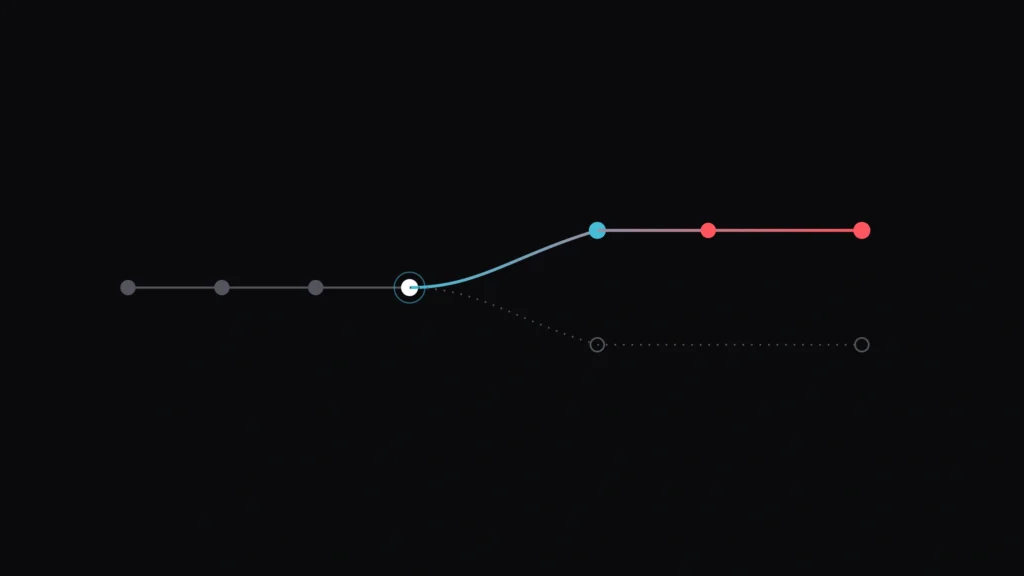
Watermarking changes where that randomness comes from. Instead of an arbitrary random number, the model uses a secret key, combined with the words that came just before, to decide which of the equally good options to pick. The word Claude ends up choosing is still effectively random to a reader, but someone holding the key can check whether the pattern of choices across a long passage is consistent with that key. If it is, they can assign a probability that Claude was involved.
Claude’s approach is a modified version of SynthID-Text, a watermarking method Google DeepMind published in Nature in 2024 and already uses on Gemini’s output. According to IEEE Spectrum’s reporting on the rollout, Anthropic has not published its own detection statistics, but the closest published numbers come from the original 2023 academic watermarking paper the field is built on, which reported roughly 98 percent detection accuracy with zero false positives on passages around 200 tokens long. The same reporting notes that detection gets much less reliable on short text, with Google’s own research showing accuracy falling below 50 percent on brief responses. A separate technical walkthrough of the method by machine learning researcher Sebastian Raschka points out that this scoring works without ever needing to rerun Claude itself, which is what makes checking random text on the internet computationally cheap.
A simple way to picture it: imagine a board game where each player’s move usually comes from rolling a die, but instead the game secretly uses a long, fixed sequence of digits from a source only the organizer knows. The moves still look completely random to everyone playing. But afterward, the organizer, and only the organizer, can check whether the sequence of moves matches that known source. Claude’s watermark works on the same principle, applied to word choices instead of dice rolls.
| Text length | What research on similar watermarking methods suggests |
| Very short (a sentence or a tweet) | Often unreliable. Too few word choices to leave a detectable pattern. |
| A paragraph (roughly 100 to 200 words) | Detection becomes meaningfully more reliable as length increases. |
| A full essay or article | Highest confidence range, more word choices means more signal to check. |
Can Universities Actually Detect a Claude Watermark Right Now?
As of this writing, Anthropic’s own watermark detection tool is in private preview, not a public checker anyone can use. Both Anthropic and the Claude Help Center describe eligibility as limited to:
● Regulators and law enforcement
● Media organizations and fact checkers
● Independent researchers
● Educational organizations
● EU civil society groups
● Enterprises with their own compliance obligations under the Act
That makes universities a plausible future user group, but plausible is not the same as confirmed. There is no public record of a university having deployed Anthropic’s official detector institution wide at the time of writing, and access is expected to expand gradually rather than all at once. Anthropic has said it will continue widening eligibility over time, and organizations can register interest directly, but there’s no published timeline for when, or whether, individual universities will be added to that list.
This is exactly why students should be cautious about any commercial website calling itself a “Claude watermark detector.” Ordinary AI detectors work by analyzing surface level patterns in phrasing, the kind of stylistic tics AI models tend to fall into, which is a fundamentally different approach from checking a cryptographic key. A service without Anthropic’s actual key cannot verify a Claude watermark, no matter what its marketing copy claims. If you want to understand what your instructor is actually looking at when a paper gets flagged, how professors detect ai walks through the different signals professors typically weigh, watermark or not.
One legitimate tool worth knowing about: Anthropic offers a free Claude Content Checker for files, which verifies C2PA credentials on images Claude has processed. It’s a narrower tool than a full text watermark detector, but it is real, official, and free, which is more than can be said for most of the third party tools currently advertising themselves in this space.
What a Watermark Does and Doesn’t Prove
A detected watermark tells you Claude was likely involved in producing or processing a piece of text at some point. It does not tell you who had the original idea, whether the underlying research was genuine, or how much of the final wording is actually the model’s own choice versus a light edit of something a person already wrote.
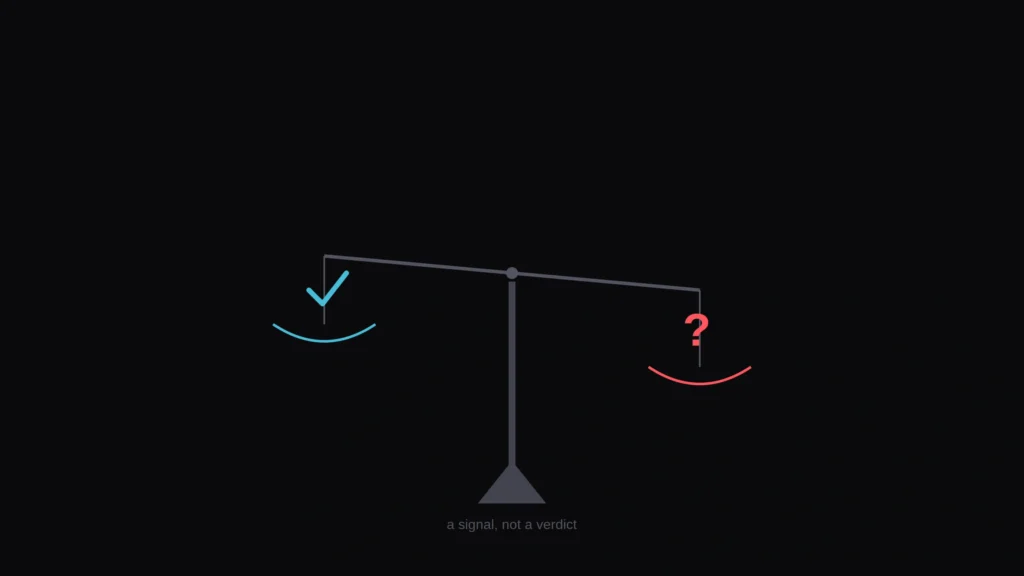
This cuts both ways. A student might write an assignment entirely on their own and then ask Claude to proofread it, and Anthropic’s own documentation confirms that output can still carry a detectable mark even when the underlying ideas and most of the original wording came from somewhere else entirely. The reverse is just as true: the absence of a mark proves nothing either, since it might simply mean an older, unsupported model was used, or the text was heavily edited, translated, or mixed with other writing after the fact.
| Scenario | What it might show | What it doesn’t show |
| Watermark detected | Claude processed the text at some point | Who had the ideas, or how much Claude actually wrote versus edited |
| No watermark detected | Nothing conclusive either way | That a human definitely wrote it |
| Claude used only for proofreading | A mark may still be present | That the underlying work isn’t genuinely the student’s own |
If you’ve already been flagged based on a score or a suspected mark and you’re not sure what your options actually are, ai detection false positives covers how to respond before a misunderstanding turns into a bigger academic integrity issue.
Universities Are Moving From “Detect the AI” to “Defend Your Work”
Even before official watermark detection becomes widely available, several UK universities have already been adjusting how they assess authorship, and the direction is telling. University College London’s academic misconduct procedure now includes an investigatory viva for cases where authorship is genuinely in question, an oral conversation designed to establish whether a student can explain the reasoning behind their own submitted work, something no AI detection score can test.
Leeds University Business School takes a more process focused approach, advising students to keep research notes, outlines, drafts, and version history as evidence of how a piece of work actually developed over time, not just the polished final version. The University of Sheffield uses what it calls an “Acknowledge, Describe, Evidence” model in assessments where AI use is permitted, asking students to name the tool, describe how they used it, and provide supporting evidence such as prompts and outputs.
This mirrors a pattern that’s already played out around conventional AI detectors. King’s College London has said it chose not to enable Turnitin’s AI detection percentage at all because of concerns about false positives, pointing instead toward assessment design and academic integrity procedures. Several US universities reached the same conclusion around the same tool.
The common thread across all of these approaches is that oral defense and process evidence test something a watermark or a detector score never can, whether the student actually understands what they submitted. A polished, well cited paper says very little on its own. Being able to explain why a particular method was chosen, what a specific result means, or where a claim’s evidence actually comes from is much harder to fake regardless of which tools were used along the way.
Will AI Humanisers and Detection Bypass Tools Survive This?
Possibly, but the value proposition is getting shakier. Humanising tools typically work by restructuring sentences and swapping vocabulary to lower a conventional AI detector’s score, a completely different target from a statistical watermark baked into word choice at generation time.
Sebastian Raschka’s detailed technical breakdown of the method suggests a likely workaround: generate the first draft with a strong model like Claude, then run it through a second, unwatermarked local model to make edits. In his own analysis, that approach probably works to strip the mark, but it also tends to make the writing noticeably worse, since a smaller editing model is now making surgical changes without the context or quality of the original generation.
There’s also a more mundane version of this happening already. One widely shared newsletter on the announcement described people running their own writing through a paraphrase and check loop, rewording flagged sections and rechecking until a detector comes back clean, at a cost of a few cents per pass. That workflow was never really about detectors in the first place, and a proper watermark doesn’t make it go away, it just adds one more layer to route around. Independent research on similar watermarking methods suggests that reliably removing a signal from a long passage typically requires changing something like a quarter of its words or more, which is functionally closer to a rewrite than an edit.
The more important point for students specifically: none of this changes whether you actually understand your own material. Rewording an AI generated paragraph until it stops triggering a percentage doesn’t retroactively create the research process, the argument development, or the subject knowledge an assignment is meant to demonstrate.
One newsletter covering the business fallout of the announcement framed it as genuinely human made work starting to command a premium, the same way handmade goods already do in other markets, precisely because that claim is getting harder to prove and therefore rarer. For students the equivalent isn’t a pricing premium, it’s a grading one: work you can explain, defend, and trace back to your own process holds up under scrutiny in a way that a clean looking percentage never fully will.
What This Means for Students, By Discipline
Watermarking doesn’t land the same way across every field. How much Claude actually writes, versus edits or assists with, changes both how likely a watermark is to appear and what it would even mean if it did. The stakes differ too. A false alarm in a first year elective is annoying.
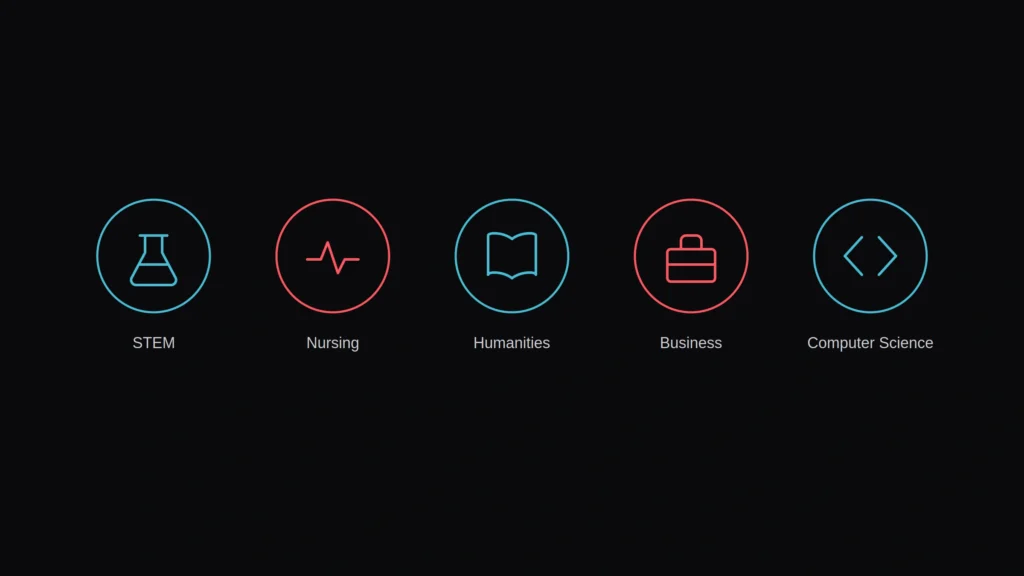
The same false alarm attached to a nursing clinical, a capstone, or a dissertation chapter can threaten months of work, which is exactly why understanding your own field’s risk profile is worth the ten minutes it takes to read this section.
STEM and Lab Reports
Technical writing already leans on precise, often singular correct phrasing, there usually isn’t a genuinely interchangeable synonym for a specific chemical name or a formula description. Anthropic’s own documentation notes that watermarking is sparser wherever an exact answer is required, since there’s no equally good alternative word to nudge toward. That means lab reports and methods sections may carry a weaker signal even when Claude was genuinely involved in drafting them.
Nursing and Health Sciences
Clinical documentation follows a standardized format for patient safety reasons, and that same formulaic structure already made this kind of writing prone to false flags from ordinary AI detectors, watermarking doesn’t change that underlying risk. Since nursing programs often tie academic integrity directly to future licensure, it’s worth keeping draft history for any AI assisted care plan or clinical writeup, regardless of whether a watermark is technically detectable.
Humanities and Literature Essays
Long form analytical writing, with plenty of room for genuinely interchangeable phrasing, is exactly where a text watermark has the most space to register if Claude generated a substantial portion of it. This is also where the proofreading distinction matters most: a genuinely self-written essay that Claude only lightly copyedited is unlikely to carry a strong mark at all, since there simply isn’t much of Claude’s own word choice in the final text.
Business and Case Study Writing
Business writing sits somewhere in the middle, concise and convention heavy, but with more room for stylistic variation than a lab report. Case studies and executive summaries drafted substantially by Claude would likely carry a detectable signal at typical assignment lengths, which is worth knowing if a course explicitly restricts AI use on this kind of deliverable.
Computer Science and Coding Assignments
Code is the clearest example of where this watermark mostly disappears. Anthropic states directly that where an exact output is required, and code very often has to be exact or it simply breaks, the watermark isn’t applied at all. A variable name choice or a code comment might carry a faint signal, but the actual logic of a generated function generally won’t. This is also the area where critics have pushed back hardest, arguing that any attempt to nudge word or token choices in code risks introducing subtle bugs, which is likely why Anthropic scaled the technique back so heavily here.
If a discipline specific project, like a capstone, is where you’re most worried about getting AI use wrong, EssaysHelper offers expert academic support for capstone projects across every discipline, from nursing care plans to business case studies to technical write ups, which is a more direct way to reduce risk than trying to reverse engineer what a detector or a watermark might flag.
A More Sustainable Way to Work With AI
The practical response to all of this isn’t to stop using Claude or any other AI tool, it’s to use it in a way you could actually explain and defend if someone asked. Check the specific rules for each module or assessment, since permitted use varies widely even within the same course. Keep drafts, outlines, and version history where you can. If your school requires disclosure of AI use, keep the prompts and outputs that show exactly how you used it.
A quick self-check before you submit anything:
● Could you explain how your argument or methodology actually developed?
● Could you show where your key evidence and sources came from?
● Could you accurately describe any AI assistance you used, if asked?
● Could you defend your findings and conclusions in a short conversation?
If you want a straightforward way to sanity check a draft before you submit it, Skyline’s best ai content detector runs a quick scan without any of the upsell tactics some competing tools rely on.
Watermarks and detector scores can only tell you so much on their own. If you want to understand your own risk in detail, or you need personalized academic support built around your specific course and discipline, you can book a free discovery call and talk it through with someone directly instead of guessing based on a percentage.
And for a wider view of how AI detection is evolving across tools beyond just Claude, read more insights on ai detections covers the broader landscape.
Frequently Asked Questions
What exactly is a Claude watermark and how does it work?
It’s an invisible statistical pattern woven into Claude’s word choices as it writes, not a hidden character or visible label. Anthropic can check for the pattern using a secret key, which tells them the likelihood that Claude was involved in producing the text.
Can I get in trouble if Claude watermarks text I only used for proofreading?
It’s possible, since a light edit can still leave a faint mark even though the original ideas and most of the wording are yours. Keeping your original draft and version history is the best protection if that ever comes up.
Is there a real tool to check if text has a Claude watermark?
Anthropic’s official detection tool is in private preview, limited mostly to regulators, researchers, and educational organizations, not the general public. Most consumer sites claiming to detect a Claude watermark have no verified way of actually doing so.
Can I remove a Claude watermark from my writing?
A complete rewrite likely removes it, but research on similar methods suggests you’d need to change roughly a quarter or more of the words to be reliably effective. At that point it’s arguably no longer the same AI generated text to begin with.
Does the Claude watermark affect code Claude writes?
Barely. Anthropic applies little to no watermarking where an exact output is required, and code very often has to be exact or it breaks, so the technique mostly doesn’t apply to generated logic.
Will my university know if I used Claude to write my assignment?
Not directly through the watermark alone right now, since public detection access doesn’t exist yet. Many universities are relying more on version history, source checks, and oral questioning than on any single detection tool.
Are Claude watermark remover tools safe to use?
Treat them with real caution. Reporting on the rollout found that several tools marketed this way could not verify their own claims, and some were flagged as carrying malware.
Does watermarking mean AI detectors like GPTZero are no longer needed?
No, they measure different things. Conventional detectors look for stylistic patterns in any AI generated text, while a watermark only works on supported Claude output and requires Anthropic’s own key to check.
Can older Claude models or other AI tools be watermarked too?
Older Claude models are being updated to support watermarking over time under an EU transition period. Other major AI providers, including Google, have signed the same EU code and are rolling out comparable watermarking on their own models.
What should I do if my work gets flagged even though I wrote it myself?
Stay calm, don’t rewrite the whole paper to chase a lower score, and bring your draft history, outline, and notes as evidence. Most universities have an appeals process, and a single score or suspected mark is rarely treated as proof on its own.
The Bottom Line
Claude’s watermark is a real, technically interesting shift, but it isn’t the instant AI lie detector some of the initial reaction assumed. It only works on supported models, detection access is still tightly limited, short text barely carries a signal, and a watermark can never tell anyone whether you actually understand what you submitted.
The universities adapting fastest aren’t betting everything on this one signal, they’re combining it with version history, source verification, and old fashioned conversation. That’s a reasonable model for students to copy too: use AI within the rules of each assessment, keep evidence of your own process as you go, and make sure you could always explain your work out loud if someone asked. Watermarks, detectors, and policies will all keep changing. Being able to defend your own understanding won’t go out of date.